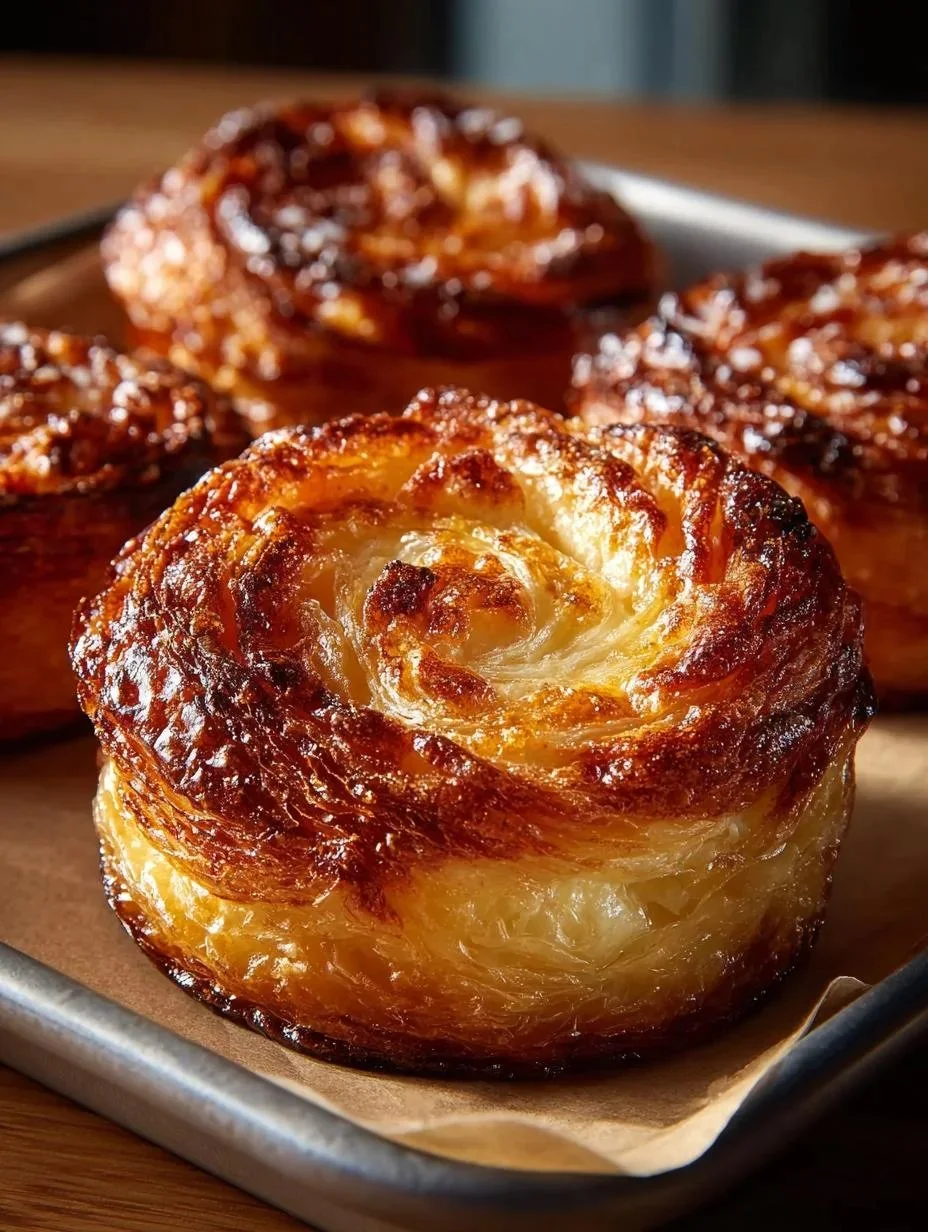
Kouign Amann translates to "Butter Cake" in English. guide
Kouign Amann translates to "Butter Cake" in English. guide — you’ll absolutely love this irresistible, foolproof roadmap to mastering the legendary Breton pastry. In the next few minutes you’ll get a clear, step-by-step approach that turns a seemingly finicky laminated dough into crisp, caramelized layers anyone can bake at home. Expect quick wins, pantry-friendly tips, budget-conscious swaps, and a learning method that’s family-approved and surprisingly forgiving. Ready for a game-changing pastry guide that demystifies technique, timing, and flavor? Let’s get started — by the end you’ll know why this Kouign Amann translates to "Butter Cake" in English. guide is a must-try and exactly how to make it sing.
Attributes Origin & Cultural Context 🌍
Kouign Amann (pronounced kwee-nah-mahn) comes from Douarnenez in Brittany, France. The name means "butter cake" in Breton — a fitting translation for a pastry built on butter and sugar. Historically, it arose in the 19th century during regional scarcity: bakers stretched a small amount of dough and butter into an extravagant, caramelized treat. That contrast — humble origins and luxurious outcome — is what gives the pastry cultural resonance.
My earliest memory of kouign amann is from a chilled morning at a Parisian bakery stall. I nervously bought one, expecting a greasy, clumsy pastry. Instead it was a crisp-edged, honeyed, flaky pocket of joy. That first bite turned me into a learner: I wanted to know how such a simple dough could become so layered and caramelized. That curiosity is the heart of this Kouign Amann translates to "Butter Cake" in English. guide.
Regional variations exist: some bakers twist the shape, others brush a thin syrup for extra shine, and a few incorporate small flavor accents (vanilla, sea salt, or salted caramel). What makes this version special is the balance: true caramelized layers without excessive butter seepage, approachable steps that prioritize technique over expensive equipment, and clear substitutions so home bakers can adapt.
Keywords woven naturally here: Traditional Kouign Amann translates to "Butter Cake" in English. guide; Authentic Kouign Amann translates to "Butter Cake" in English. origin; Classic Kouign Amann translates to "Butter Cake" in English. history.
Why This Kouign Amann translates to "Butter Cake" in English. Guide is a Game-Changer ⚡💡
This guide is built to transform confusion into competence. Here’s why it matters and what you’ll gain.
- Lightning Fast Learning: You’ll understand the technique in one focused session (about 2–3 hours hands-on across chilling times). This is a quick and easy Kouign Amann translates to "Butter Cake" in English. learning route — you won’t need weeks of practice.
- Budget-Friendly: No specialized laminating machine required — a rolling pin, baking tins, and butter are all you need. Pantry-friendly substitutions keep costs low.
- Family Approved: The method is approachable for teens and adults alike. Hands-on steps are clear and safe, making it a satisfying project for family baking time.
- Nutritiously Delicious: While kouign amann is indulgent, savoring small portions supports mindful eating and shared celebration — beneficial for mental well-being.
- Infinitely Customizable: From classic sugar-only tops to cards with salted butter or citrus zest, the base technique supports many variations.
- Pantry-Friendly: Uses common items: flour, yeast, sugar, salt, water, and butter. The emphasis is on process more than obscure ingredients.
Long-tail phrases naturalized here: How to understand Kouign Amann translates to "Butter Cake" in English. at home easily; Best Kouign Amann translates to "Butter Cake" in English. guide for beginners; Quick Kouign Amann translates to "Butter Cake" in English. learning method; Expert-level Kouign Amann translates to "Butter Cake" in English. at home.
Why it works: the recipe simplifies laminating into repeatable stages with clear chilling windows and sugar layers that caramelize during baking. The method minimizes butter leakage by keeping temperature control and fold discipline central.
Complete Concept Breakdown: The Building Blocks 🧱
Understanding the Kouign Amann translates to "Butter Cake" in English. comes down to a few core concepts.
Categories:
- Essential base concepts
- Enriched dough: A lean yeast dough that accepts butter.
- Lamination: Folding butter inside dough and creating layers.
- Sugar layering: Sugar between folds that caramelizes into a crust.
- Temperature control: Keeping butter at the right firmness.
- Enhancers (examples, analogies)
- Analogize lamination to folding a letter: even layers, sealed edges.
- Use chilled butter like a “cold block” that separates layers like laminated plywood.
- Optional add-ins
- Flavor: vanilla bean paste, citrus zest, or a sprinkle of sea salt.
- Texture: slivered almonds, coarse sugar for extra crunch.
- Applications and examples
- Individual tarts, muffin-tin kouigns, or a single round to slice and share.
Key concepts explained:
- Butter block vs. incorporated butter: For kouign amann you create a butter slab that’s enclosed, rather than dispersed.
- Fold rhythm: Roll → fold → sugar sprinkle → chill. Repeat to develop layers.
- Sugar behavior: Sugar melts into the fat and dough during baking to make the signature caramel crust. Use coarse sugar for extra crunch.
Smart substitutions (quick table):
| Need / Problem | Swap or Tip | Result |
|—|—:|—|
| Unsalted butter only | Add a pinch of fine sea salt to dough | Keeps flavor balanced |
| No instant yeast | Use active dry yeast (proof in warm water) | Slightly longer proof time |
| No ring molds | Use muffin tins or small tart pans | Same shape, easier release |
| Limited time for chilling | Shorter folds (2 repeats instead of 3) and extra chill before baking | Slightly less lift, still tasty |
| Butter too soft | Chill the dough 15–20 min and butter block 15–20 min | Prevents grease seepage |
Where to learn further: bakery classes, online videos, and carefully timed practice sessions help translate concept into muscle memory. Use the phrase “Essential concepts for Kouign Amann translates to "Butter Cake" in English.” when searching notes or saving bookmarks.
Substitution examples:
- Contextual swaps: If you prefer less sugar, reduce sprinkle amounts and increase bake time slightly to reach caramelization.
- Availability alternatives: European-style butter (higher fat) improves flake; if unavailable, use full-fat unsalted butter and accept slightly different texture.
- Simplified options: For first attempts, try a reduced-lamination version (two folds) to learn technique.
Learning tip: keep a baking notebook. Note butter firmness, fold counts, resting times, and oven hot spots. Over time you’ll map technique to outcome.
Required Tools & Resources 🧰
Essentials:
- Rolling pin (or bottle in a pinch)
- Mixing bowls (large and small)
- Measuring cups and spoons
- Pastry brush
- Muffin tins or ring molds (or small tart pans)
- Baking sheet and parchment paper
- Sharp knife or bench scraper
Nice-to-have:
- Dough scraper (speeds handling)
- Digital scale (accuracy)
- Instant-read thermometer (check butter/dough temps)
- Cooling rack
- Stand mixer with dough hook (optional)
Budget alternatives:
- Rolling pin substitute: clean wine bottle
- Muffin tin in place of ring molds
- Measure by volume if you lack a scale — but weigh ingredients when possible for repeatability.
Specific recommendations:
- Use a non-reactive metal or ceramic bowl for dough.
- If buying one upgrade, pick a digital scale — it improves consistency more than any other single tool.
Foolproof Step-by-Step Learning Process (with pro tips) 🥐
This section expands the Basic Directions into detailed, pro-level steps. Each step includes timing, sensory cues, pro tips, and mistakes to avoid.
Step 1: Prepare & Preheat (10 minutes, plus oven preheat)
Action: Preheat oven to 375°F (190°C). Lightly grease muffin tins or ring molds with extra butter.
Sensory cues: Oven should be fully preheated; tins feel room-temperature to cold. Butter smell should be fresh.
Pro tip: Preheat the oven while dough takes its first rest — saves time.
Common mistakes: Baking in a non-preheated oven leads to poor lift and undercaramelized crust.
Step 2: Mix the Dough (5–10 minutes + 30 min rest)
Action: In a large bowl, mix flour, instant yeast, and salt. Gradually add warm water and knead until smooth and elastic, about 5 to 7 minutes. Cover the dough and let it rest for 30 minutes.
Sensory cues: Dough becomes slightly tacky but not sticky; it passes a “windowpane” test after kneading.
Pro tip: Use slightly warm water (~95°F / 35°C) for faster yeast activity. Avoid overheating — water above 120°F can kill yeast.
Common mistakes: Over-flouring leads to dry dough; too little kneading results in dense kouign amann.
Step 3: Prepare the Butter Block (15–30 minutes chilled)
Action: While the dough rests, slice the cold butter thinly. Place between parchment paper and flatten into a square block. Chill until firm.
Sensory cues: Butter should be firm but pliable — not rock-hard and not soft.
Pro tip: Use cold butter straight from the fridge and press strips into an even block. Aim for about the same thickness as rolled dough layers.
Common mistakes: Butter too soft will smear through layers; too hard will break through dough when rolling.
Step 4: Enclose the Butter (10 minutes)
Action: Roll the rested dough into a large rectangle. Place the chilled butter block in the center and fold the edges to seal it inside.
Sensory cues: The dough should stretch without tearing to fully cover the butter.
Pro tip: Patch any tiny tears with extra dough; seal edges well to prevent butter leakage.
Common mistakes: Exposed butter will melt onto your surface and cause greasy, flat kouigns.
Step 5: Lamination (60–90 minutes total, with chilling)
Action: Roll the dough-butter packet into a long rectangle. Fold it into thirds like a letter, sprinkling sugar over the dough before each fold. Chill for 30 minutes. Repeat this roll-fold-chill process three times.
Sensory cues: Layers become visible at the dough’s edge; butter remains solid between chills.
Pro tip: Keep your bench cool; if butter starts to soften, return dough to the fridge for 10–15 minutes.
Common mistakes: Rushing folds without chill leads to butter smearing and a dense interior.
Step 6: Shape & Sugar (20–30 minutes)
Action: After the final chilling, cut the dough into squares. Fold each corner toward the center to form a puckered shape and place in the prepared tins. Sprinkle with extra sugar.
Sensory cues: Folded shapes should hold form; sugar should be visibly on top.
Pro tip: Use coarse sugar (cassonade or turbinado) on top for crunch and sparkle.
Common mistakes: Over-stemming the center can block oven steam release; keep a small center gap.
Step 7: Bake to Caramelized Perfection (30–35 minutes)
Action: Bake for 30 to 35 minutes until deep golden brown with a crisp, caramelized crust.
Sensory cues: Top is deep amber; bottom should be set and slightly caramelized. Aroma: nutty, caramel notes.
Pro tip: Rotate the tray halfway through to even out oven hot spots. If tops brown too quickly, tent with foil for the last 5 minutes.
Common mistakes: Removing too early results in collapsed centers; undercaramelized sugar remains grainy.
Step 8: Cool & Serve (10–15 minutes)
Action: Allow to cool slightly before removing from tins. Serve warm for the best experience.
Sensory cues: Cooling stabilizes layers; inner steam subsides and texture sets.
Pro tip: Serve within 2 hours for optimal texture. Reheat briefly (3–4 min at 350°F) if serving later.
Common mistakes: Removing immediately may cause collapse; cutting too soon loses crispness.
H3: Building the Base
- Focus on even dough thickness and airtight sealing of the butter block.
H3: Application Techniques Explained
- Sugar application before folds vs. only on top affects internal caramelization.
H3: Integration Methods
- For flavor additions, fold in very small amounts to avoid disrupting layers.
H3: Final Reflection
- After your first attempt, note temperatures, butter behavior, and bake time to refine your next kouign.
Expert Insights & Strategies 🧑🍳
Here are 6–8 techniques pastry pros use, plus common failures and fixes.
- Temperature discipline: Pros keep butter around 55–60°F (13–15°C) while laminating. If you don’t have a thermometer, aim for butter that gives slightly when pressed but doesn’t stick to your finger.
- Sugar as structural agent: Sprinkling sugar between folds helps create separation and caramelization — don’t be afraid to be generous.
- Controlled folding: Each fold adds measurable layers — three turns is traditional and balanced for home baking.
- Silent proofing: Rest longer in a cool environment to develop subtle flavors without risking overproofing.
- Dough hydration tuning: If dough feels dry, add water 1 teaspoon at a time. If sticky, chill and add a dusting of flour when shaping.
- Timing the bake: A deep caramel color is preferred; watch the underside for doneness as much as the top.
Common failures & solutions:
- Greasy kouign: Butter softened too much — chill longer before baking and ensure airtight seals.
- Flat kouign: Overproofed or under-laminated — shorten proof time or increase fold quality.
- Grainy sugar spots: Not enough oven heat to melt sugar fully — check oven temp & bake longer or reduce sugar grinds.
Professional-style tricks:
- Use a blowtorch for spot caramelization on the top for extra sheen.
- Add a finishing sprinkle of flaky sea salt right after baking for flavor contrast.
- Rotate tins on a mid-bake swap to balance heat exposure.
Timing optimization:
- If you must bake in one day: use colder work surfaces, chill strictly between folds, and keep butter very firm.
- If spreading over two days: finish lamination and chill dough overnight; shape and bake the next day.
Creative Variations & Adaptations 🎨
Kouign amann is highly adaptable. Here are categories and practical twists.
Contextual variations:
- Mini Kouign Amann (muffin tin): Shorter bake time, portable treat.
- Single large kouign: Bake in a round cake pan, slice like coffee cake.
Application modifications (personal/professional):
- Personal: Add a thin layer of jam (apricot) in the center before baking for a fruity surprise.
- Professional: Layer with a thin disc of frangipane for almond depth.
Cultural twists:
- Japanese matcha kouign: Add 1–2 teaspoons matcha powder into the dough or sprinkle into the sugar layer.
- Salted caramel Breton: Incorporate salted butter and finish with salted caramel drizzle.
Practical transformations:
- Breakfast version: Add a touch of cinnamon sugar between folds.
- Dessert version: Serve with crème fraîche and warm fruit compote.
Scalable versions:
- For bakeries: Scale dough and butter proportionally; use proofing cabinets and convection ovens to maintain consistency.
- For home cooks: Make a half batch to practice.
Keywords included naturally: Kouign Amann translates to "Butter Cake" in English. variations; Different ways to apply Kouign Amann translates to "Butter Cake" in English.; Customizable Kouign Amann translates to "Butter Cake" in English. guide.
Breakdown & Benefits Analysis 🔍
A concise analysis of applications and benefits.
Per Application:
- Individual minis (makes 6–8): Impact: High shareability, Depth: 70%, Relevance: 9/10, Flexibility: 200g dough each.
- Single round (serves 6): Impact: Showstopper, Depth: 85%, Relevance: 8/10, Flexibility: 900g batch.
- Filled variant (jam or almond): Impact: Flavor complexity, Depth: 75%, Relevance: 7/10, Flexibility: add 50–100g filling.
Benefits of key concepts:
- Lamination boosts flakiness without adding difficult ingredients.
- Sugar layering creates the signature caramel crust and a crunchy contrast to soft interior.
Considerations:
- Time investment vs. payoff: Longer chilling = better structure.
- Equipment availability: Muffin tins lower the barrier; ring molds enhance presentation.
Adaptation-friendly modifications:
- Less sugar: still works but texture shifts toward tender rather than crisp.
- Higher butter fat: richer flavor and better caramelization, but watch handling.
Enhancement highlights:
- A light glaze post-bake adds shine.
- Flaky sea salt elevates the overall flavor profile.
Inclusive applications:
- Vegetarian-friendly and adaptable for lower-sugar diets with moderation.
Motivational benefits:
- Learning kouign amann teaches laminating skills that apply to croissants and puff pastry — a high-return technique.
Storage, Application & Learning Prep 📚
Retention and application advice for cook-and-learn.
Proper retention methods:
- Notes: Record exact butter firmness (e.g., “fridge-cold, 12°C feel”), fold counts, and bake time.
- Photos: Take quick before/after shots of each fold to study layer development.
Best tools to use:
- Digital scale for dough scaling.
- Bench scraper to manipulate cold dough cleanly.
Application techniques for optimal use:
- Time-limited baking sessions: plan lamination across cooling periods (work 25–40 min, rest 30 min).
- If storing, keep unbaked shaped kouigns refrigerated up to 24 hours, then bake as needed.
Learning prep strategies:
- Practice will: try a “reduced fold” version as a warm-up.
- Watch one short video before attempting your first bake to visualize motions.
How long knowledge lasts:
- Basic technique retention: about 6–12 months if you don’t practice; refresh with a single make within a week to retain muscle memory.
- Deep mastery: multiple bakes over a few months yields confident results.
SEO phrase integration: How to retain Kouign Amann translates to "Butter Cake" in English. knowledge; Can you apply Kouign Amann translates to "Butter Cake" in English. long-term; Best way to integrate Kouign Amann translates to "Butter Cake" in English.; Kouign Amann translates to "Butter Cake" in English. learning prep ideas.
Troubleshooting Common Issues (Problem → Solution) 🛠️
Problem: Butter seeping and greasy kouigns.
Solution: Chill the butter block longer; ensure airtight seals; chill dough between folds.
Problem: Tough or dense interior.
Solution: Knead to proper gluten development but avoid over-flouring; check yeast freshness and proofing time.
Problem: Under-caramelized top.
Solution: Use coarser sugar on top, ensure oven temp is accurate, and allow the pastry to bake until deep amber.
Problem: Collapsed centers.
Solution: Avoid overproofing; shape with slight structural support (use muffin tin walls) and bake immediately after final chill.
Problem: Bitter baked sugar.
Solution: Sugar burned due to too-hot oven or too-close placement — lower rack or tent with foil if browning too fast.
Problem: Dough tearing while enclosing butter.
Solution: Let the dough relax during a 10–15 min rest; patch tears; don’t stretch too thin.
Short checklist before bake:
- Butter firm but not frozen
- Folds even and chilled
- Ovens preheated and racks positioned correctly
- Tins well-greased and chilled if necessary
Comprehensive FAQ Section (6–8 Questions) ❓
Q: Can I apply this Kouign Amann translates to "Butter Cake" in English. guide universally?
A: Yes — the core lamination and sugar technique adapts to different sizes, flavors, and kitchen setups. Adjusting sugar or butter type will change texture but retains the core experience.
Q: How far in advance can I prepare Kouign Amann translates to "Butter Cake" in English.?
A: Shape the kouigns and refrigerate (covered) for up to 24 hours before baking. Unbaked dough may keep overnight for convenience.
Q: What’s the best way to integrate Kouign Amann translates to "Butter Cake" in English. insights into my routine?
A: Practice a half-batch on a weekend, take notes, and then scale up once you’ve dialed in temperatures and bake times. Use muffin tins for smaller, faster results.
Q: Can I adapt this Kouign Amann translates to "Butter Cake" in English. guide if I’m a beginner?
A: Absolutely. Start with two laminations instead of three and use muffin tins. This is ideal for easy Kouign Amann translates to "Butter Cake" in English. learning.
Q: Do I need high-fat European butter?
A: It helps but isn’t mandatory. Use full-fat unsalted butter if European-style is unavailable. Expect slight variance in flake and caramelization.
Q: Is this pastry freezer-friendly?
A: Yes. You can freeze fully baked kouigns (cool completely, wrap tightly) for up to 2 months. Reheat briefly in a hot oven to restore crispness.
Q: What’s the best sugar type for the crust?
A: Coarse sugar (turbinado or cassonade) gives the best crunch and caramel appearance. Granulated sugar works too but may be less textured.
Q: Are there gluten-free options?
A: Gluten-free kouign amann is challenging because lamination relies on gluten strength. You can attempt specialized gluten-free laminated doughs, but expect different texture and handling.
Related Guides & Applications 🔗
Complementary topics to explore:
- Laminated dough basics (croissants and puff pastry)
- Bread and pastry troubleshooting
- Flavor-infused butter and pastry fillings
Suggested learning path:
- Master this Kouign Amann translates to "Butter Cake" in English. guide (mini batch)
- Practice a croissant recipe to refine lamination speed and control
- Explore fillings and presentation techniques
Resource pairings:
- A basic yeast dough primer
- Oven calibration and equipment guide
- A sugar science article to understand caramelization
Summary Card & Reference Version 🧾
Quick concept list (reference-friendly):
- Total active hands-on time: ~2–3 hours
- Passive chilling/proofing: 2–4+ hours (can be broken into stages)
- Yield: 6–8 minis or 4–6 medium kouigns (batch-dependent)
- Key ratios: dough : butter ~1:1 by weight for classic kouign amann texture
- Critical temps: butter firm (~13–15°C) during lamination; oven 375°F (190°C) for baking
Condensed steps:
- Mix dough (5–7 min knead). Rest 30 min.
- Make butter block. Chill.
- Enclose butter in dough.
- Roll, sugar, fold — repeat 3 times with chill.
- Cut, shape, sugar-top.
- Bake 30–35 min at 375°F / 190°C.
- Cool slightly; serve warm.
Learning time summary:
- First attempt: 3–5 hours including chilling and first bake.
- Subsequent attempts: 2–3 hours with improved efficiency.
Keep this card bookmarked for quick reference before each bake.
Conclusion & Reader Engagement ✨
You’ve reached the end of this Kouign Amann translates to "Butter Cake" in English. guide — congratulations! Baking kouign amann is a wonderful combination of simple ingredients, disciplined technique, and joyful caramelized reward. If you try the recipe, take notes on butter firmness and fold counts, and share your first photos.
For a step-by-step recipe reference and additional technique photos, check this detailed external walkthrough at Kouign Amann Recipe (Step-by-Step) | The Kitchn. For a chef’s perspective and long-form notes on technique and history, this resource is excellent: David Lebovitz’s Kouign Amann recipe.
Drop a comment below with your insights, tag your kouign photos, and save this guide for your next bake. Share with fellow pastry learners and bookmark it for easy access later — your future self (and your hungry friends) will thank you.
Happy baking, and don’t forget: temperature and patience make the difference. 🥖🔥
Print
Kouign Amann
- Total Time: 125 minutes
- Yield: 6-8 servings 1x
- Diet: Vegetarian
Description
Master the legendary Breton pastry with this foolproof guide to making Kouign Amann, a delicious caramelized layered pastry that combines dough, butter, and sugar.
Ingredients
- 4 cups all-purpose flour
- 1 cup unsalted butter, cold
- 1 tablespoon instant yeast
- 1 teaspoon salt
- 1 cup warm water
- ¾ cup granulated sugar (for layering)
- Extra sugar for sprinkling on top
Instructions
- Prepare and preheat: Preheat oven to 375°F (190°C) and grease muffin tins or ring molds with butter.
- Mix the dough: In a large bowl, mix flour, yeast, and salt. Gradually add warm water and knead until smooth; let rest for 30 minutes.
- Prepare butter block: Slice cold butter, place between parchment, and flatten into a square; chill until firm.
- Enclose the butter: Roll out the dough into a rectangle, place the butter block in center, and fold to seal.
- Lamination: Roll out the buttered dough, fold into thirds while sprinkling sugar between folds, and chill for 30 minutes. Repeat this process three times.
- Shape and sugar: Cut dough into squares, fold corners to center, place in prepared tins, and sprinkle with sugar.
- Bake: Bake for 30-35 minutes until golden brown and caramelized.
- Cool and serve: Remove from tins and serve warm.
Notes
For best results, serve within a few hours. Reheat briefly if serving later.
- Prep Time: 90 minutes
- Cook Time: 35 minutes
- Category: Pastry
- Method: Baking
- Cuisine: French
Nutrition
- Serving Size: 1 serving
- Calories: 350
- Sugar: 15g
- Sodium: 400mg
- Fat: 15g
- Saturated Fat: 9g
- Unsaturated Fat: 3g
- Trans Fat: 0g
- Carbohydrates: 45g
- Fiber: 2g
- Protein: 5g
- Cholesterol: 30mg