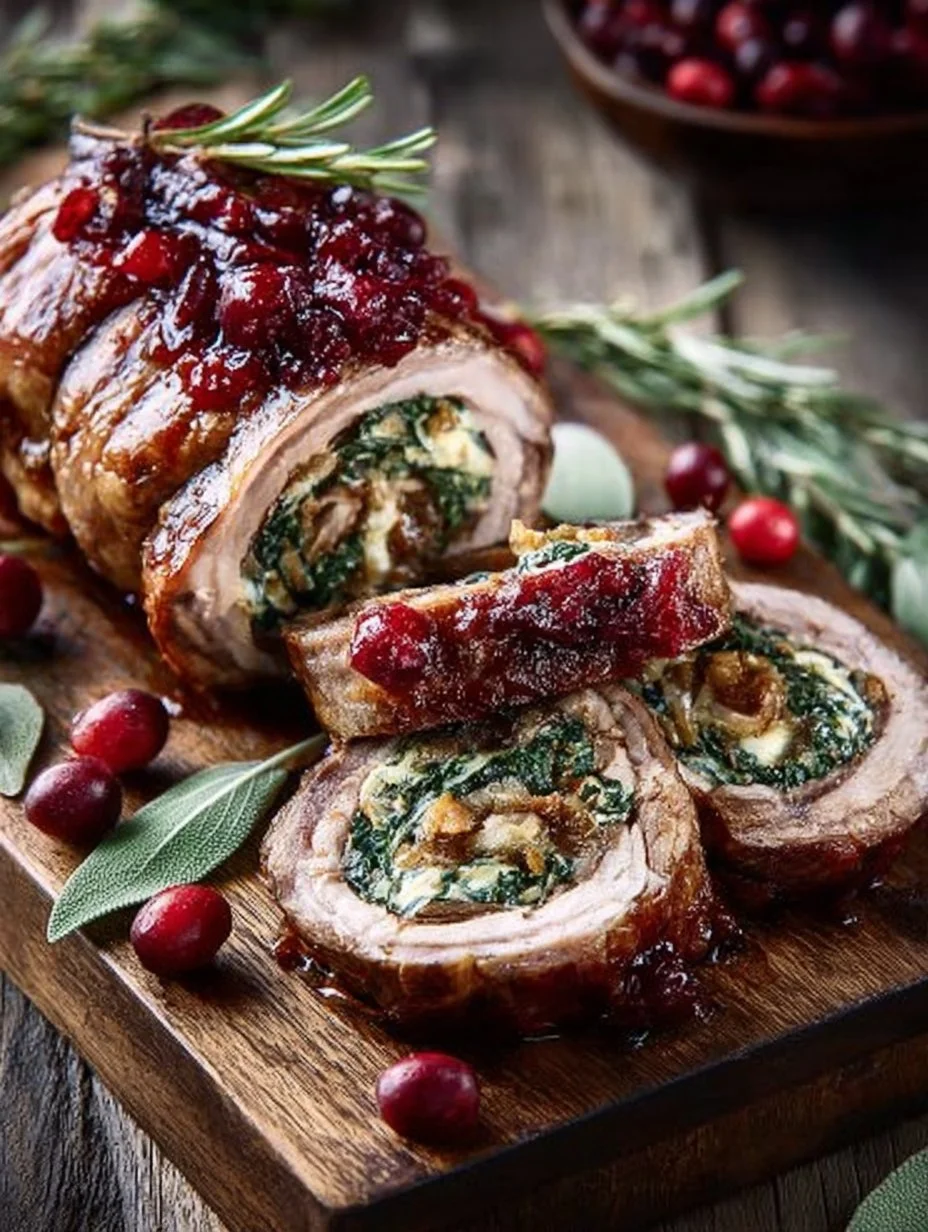
Christmas Stuffed Pork Tenderloin guide: A Festive, Foolproof Holiday Centerpiece 🎄🍖
Ready for the most irresistible Christmas Stuffed Pork Tenderloin guide that takes just a bit of prep and gives you an incredible centerpiece? You’ll absolutely love how this method is quick, crowd-pleasing, and surprisingly flexible — perfect for holiday dinners, cozy family nights, or when you want a show-stopping main without the stress. In the next pages you’ll learn a simple stuffing base, smart substitutions, pro searing and roasting tips, and creative twists (apple, bacon, herb-forward, and vegetarian-inspired options). By the end you’ll be able to cook a tender, juicy stuffed pork tenderloin that slices beautifully and serves up warm, savory memories.
Quick preview: we’ll cover origins and traditions, why this specific approach works, a complete concept breakdown with substitution ideas, required tools, a detailed step-by-step cooking and learning process with pro tips, expert strategies, creative variations, troubleshooting, storage and reheating, FAQs, related guides and a compact reference summary. Let’s make this holiday meal easy, delicious, and memorable. (Tip: if you’re sipping a holiday latte while you read, check this Christmas morning chai latte pairing for a cozy start.) ☕✨
1️⃣ Attributes Origin & Cultural Context (H2) 🎁
Christmas roasts and stuffed meats are a long-standing part of Western holiday tables. Stuffing meats—whether poultry, pork, or beef—has roots in medieval European cooking when stuffing extended flavors and made celebrations feel abundant. Pork tenderloin stuffed with seasonal ingredients (dried fruit, nuts, herbs, and breadcrumbs) became popular because pork pairs beautifully with sweet-savory contrasts.
My family’s Christmas version began when my grandmother swapped a plain roast for a stuffed pork tenderloin one snowy December. She used leftover cranberry chutney and toasted walnuts, and the dramatic sliced presentation became the family’s favorite. That iteration taught me two things: bold contrasts (sweet + savory) win, and a neat, even slice makes any holiday table look intentional.
What makes the version in this guide special is the balance of reliable technique (butterflying, even stuffing distribution, searing + roast) and pantry-friendly ingredients. You can make it rustic or elegant, quick or showy. Regional variations exist—Scandinavian versions might use lingonberry and mustard, Southern U.S. cooks add pecans and cornbread-like stuffings, while Mediterranean riffs include figs, olives, and preserved lemons.
If you like seasonal sides, try pairing with stuffed mini pumpkins for a whimsical side (stuffed mini pumpkins)—the visual contrast is lovely and keeps the menu cohesive.
Keywords woven here: Traditional Christmas Stuffed Pork Tenderloin guide • Authentic Christmas Stuffed Pork Tenderloin origin • Classic Christmas Stuffed Pork Tenderloin history.
2️⃣ Why This Christmas Stuffed Pork Tenderloin Guide is a Game-Changer (H2) ⚡
This guide is designed to be accessible, fast, and adaptable while producing professional results. Here’s why it consistently delivers:
- ⚡ Lightning Fast — The core technique (butterfly, stuff, sear, roast) can be understood in 10–15 minutes and executed in about 35–45 minutes total. That means weeknight-worthy timing for special occasions.
- 💰 Budget-Friendly — Uses pancaked pantry staples (breadcrumbs, garlic, dried herbs) rather than expensive specialty items; substitutions keep cost down without sacrificing flavor.
- 👨👩👧 Family Approved — Slices are approachable for kids and adults. Mild pork flavor with bright stuffing keeps picky eaters satisfied.
- 🥗 Nutritiously Delicious — Pork tenderloin is lean protein. Pairing it with fruit, nuts, or greens adds fiber and micronutrients — good for balanced plates that support mood and energy during busy holidays.
- 🔄 Infinitely Customizable — Swap fillings to match seasonal produce or dietary needs (gluten-free breadcrumbs, vegetarian stuffing with mushrooms and spinach, or pork-free proteins).
- 📦 Pantry-Friendly — Most ingredients are common: olive oil, breadcrumbs, garlic, rosemary/thyme, salt, pepper, optional fruit/nuts. Great for last-minute feasts.
This approach educates by doing: you’ll learn how to control temperature, use visual cues like crust color and internal thermometer readings, and troubleshoot texture issues (overstuffing, uneven roll). Long-tail phrases included naturally here: how to understand Christmas Stuffed Pork Tenderloin at home easily • best Christmas Stuffed Pork Tenderloin guide for beginners • quick Christmas Stuffed Pork Tenderloin learning method • expert-level Christmas Stuffed Pork Tenderloin at home.
3️⃣ Complete Concept Breakdown (H2) 🧭
Understanding the building blocks helps you adapt the dish confidently.
Main Concept Categories:
- Essential base concepts
- Buttery, even butterflying is critical for an even roll.
- Moisture balance: stuffing shouldn’t be too wet or too dry.
- Sear + roast: searing creates flavor and color; oven roast finishes gently for juiciness.
- Enhancers (examples, analogies)
- Acid (lemon, vinegar) brightens richness like a dash of salt brightens chocolate.
- Sweet elements (apples, dried cranberries) act like seasoning agents—small amounts lift flavor.
- Optional add-ins
- Nuts (walnuts, pecans), cheeses (goat, feta), cured meat (bacon, prosciutto), mushrooms, sautéed onions.
- Applications and examples
- Single roast for 6–8 guests, mini rolls for hors d’oeuvres, or sheet-pan family dinners.
Detailed Explanations:
- Butterflying: Lay pork flat for even thickness so it cooks uniformly. Think of it as creating a canvas.
- Stuffing texture: Use breadcrumbs as a binder—too much moisture = gummy; too dry = crumbly. Toasting breadcrumbs adds flavor and crunch.
- Searing: A 2–3 minute sear per side locks in juices and creates a Maillard crust for flavor contrast.
- Resting: Rest 5–10 minutes to allow juices to redistribute; cutting too soon loses moisture.
Smart Substitutions Table (quick):
- Breadcrumbs → gluten-free crumbs or cooked rice
- Parsley → cilantro (for Latin twist) or chives (for lighter oniony pop)
- Olive oil → avocado oil (higher smoke point) or butter for richer flavor
- Dried cranberries → chopped dried apricots or fresh apple slices
- Bacon → prosciutto (less smoky) or omit for vegetarian
Learning & Application Tips:
- Practice on a smaller pork loin first to get comfortable with butterflying.
- Use an instant-read thermometer to build confidence—145°F is target internal temp.
- Save leftover stuffing — it can be crisped in a pan as a salad topping.
SEO phrases included: Essential concepts for Christmas Stuffed Pork Tenderloin • Best examples for Christmas Stuffed Pork Tenderloin • Christmas Stuffed Pork Tenderloin concept substitutions • Where to learn butterflying and stuff techniques.
4️⃣ Required Tools & Resources (H2) 🛠️
Essentials:
- Sharp chef’s knife or boning knife (for butterflying)
- Cutting board with non-slip footing
- Oven-safe skillet (cast iron preferred) or heavy-bottomed pan for searing
- Instant-read thermometer (highly recommended)
- Small mixing bowl and spoon for stuffing
Nice-to-have resources:
- Kitchen twine or toothpicks to secure the roll
- Food processor (for homemade breadcrumbs)
- Meat mallet to even thickness if needed
Budget alternatives:
- Use store-bought breadcrumbs instead of a food processor.
- Substitute a stainless-steel skillet if cast iron is unavailable (watch heat).
- Skip kitchen twine and secure with toothpicks carefully.
Suggested quick reviews:
- Instant-read thermometer: Small investment, big payoff—prevents overcooking.
- Cast iron skillet: Great heat retention; gives the best sear.
- Sharp knife: Makes butterflying safer and more precise.
For inspiration during prep, pair with a warm side like a creamy stuffed banana pepper soup (creamy stuffed banana pepper soup) to make the meal feel fully planned.
5️⃣ Foolproof Step-by-Step Learning Process (H2) 🔪🍽️
This section doubles as a recipe and a learning module—each step teaches transferable skills.
Step 1: Prep and Mindset (10 minutes)
- Action: Read the recipe fully. Preheat oven to 400°F.
- Visual cues: Oven at temp, all ingredients on the counter (mise en place).
- Pro tip: Lay out ingredients in the order you’ll use them to reduce stress.
- Avoid: Starting cold without preheating; that ruins timing.
Step 2: Butterfly the Tenderloin (10 minutes)
- Action: Butterfly the pork tenderloin by making a deep cut lengthwise down the center, stopping about 1 inch from the other side. Open the tenderloin like a book.
- Visual cues: Meat opens flat; thickness is mostly even.
- Pro tip: Use short, confident strokes instead of sawing to keep edges neat.
- Common mistake: Cutting all the way through—stop about 1/2–1 inch from the opposite edge.
Step 3: Make the Filling (5–7 minutes)
- Action: In a small bowl, combine the breadcrumbs, parsley, garlic, thyme, red pepper flakes, salt, and black pepper.
- Visual cues: Mixture holds together loosely, not mushy.
- Pro tip: Warm breadcrumbs slightly in a pan to toast and deepen flavor.
- Avoid: Overwet fillings. If it clumps, add extra breadcrumbs.
Step 4: Assemble & Roll (5 minutes)
- Action: Spread the breadcrumb mixture evenly over the opened tenderloin. Fold the two sides back together. Secure with kitchen twine or toothpicks.
- Visual cues: Even seam, no major gaps; roll holds its shape.
- Pro tip: Tuck ends under as you roll to create a tidy log.
- Common mistake: Stuffing too full—keeps the roll unstable.
Step 5: Sear the Roll (6–9 minutes)
- Action: Heat the olive oil in a large oven-safe skillet over medium-high heat. Sear the stuffed tenderloin on all sides, about 2-3 minutes per side, until browned.
- Visual cues: Deep golden-brown crust forms.
- Pro tip: Let the meat release naturally; if it sticks, it isn’t ready to flip.
- Avoid: Crowding the pan—use a pan that fits the roll snugly.
Step 6: Roast to Finish (15–20 minutes)
- Action: Transfer the skillet to the preheated oven and roast for 15-20 minutes, or until the pork reaches an internal temperature of 145°F.
- Visual cues: Thermometer reads 140–145°F near the center; juices run clear.
- Pro tip: If the crust is browning too fast, tent with foil and continue roasting.
- Common mistake: Overcooking—removes tenderness. Aim for 145°F and rest.
Step 7: Rest & Slice (5–10 minutes)
- Action: Let the pork rest for 5 minutes before slicing and serving.
- Visual cues: Meat firms slightly; juices reabsorb.
- Pro tip: Slice against the grain for tender bites.
- Avoid: Carving immediately and losing juices.
H3: Building the Base
- Start with sound technique: even butterflying, moderate sear, correct internal temp. These are your non-negotiables.
H3: Application Techniques Explained
- Convert the base into small appetizers by rolling individual medallions, or scale up using a pork loin for more guests.
H3: Integration Methods
- Pair with sides that match the stuffing’s profile (apple-stuffed → roasted root vegetables; bacon + cheese → creamy mashed potatoes).
H3: Final Reflection
- Taste testing at each stage is a learning tool—note salt levels, texture, and aroma. Adjust next time accordingly.
This section teaches not only the recipe steps but builds muscle memory, sensory benchmarks, and troubleshooting habits.
6️⃣ Expert Insights & Strategies (H2) 👨🍳✨
Here are deeply practical tips that pros use:
- Temperature-first thinking — trust your thermometer over clock times. Pork is safe and juiciest at 145°F.
- Salt early but not excessively — salt draws moisture; season the stuffing moderately and the exterior lightly, then adjust after resting.
- Controlled sear — medium-high heat forms the Maillard reaction without overcooking the interior.
- Resting is non-negotiable — it transforms a good roast into a great one by keeping juices in slices.
- Use aromatic oil — infuse olive oil with smashed garlic and thyme before searing for a deeper crust flavor.
- Timing optimization — sear on the stovetop while the oven preheats to shave overall time.
- Integration timing — serve the sauce on the side so guests can choose moisture level and flavor punch.
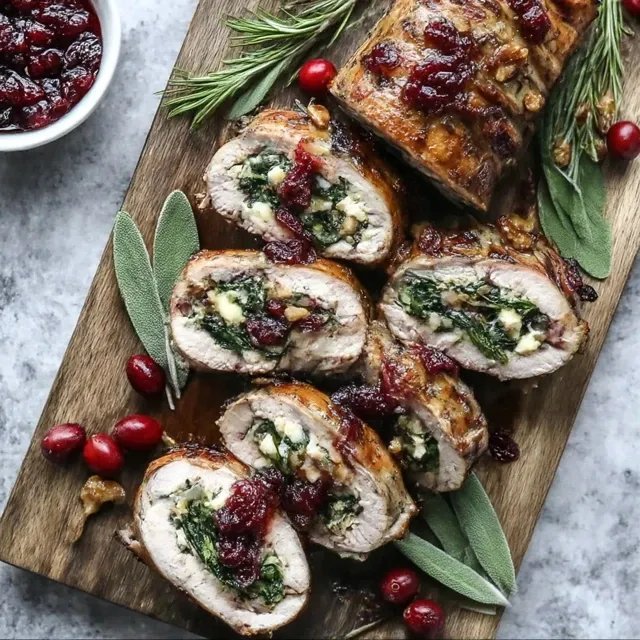
- Presentation trick — slice and fan the medallions, drizzle with a warm pan sauce or reduction, and garnish with microgreens or orange zest for color.
Common Failures and Solutions:
- Failure: Dry meat. Solution: lower final temperature target by verifying with an instant-read thermometer and rest longer.
- Failure: Soggy stuffing. Solution: increase breadcrumbs or sauté moisture-releasing ingredients (mushrooms, apples) before combining.
- Failure: Uneven roll. Solution: pound to even thickness before butterflying or use twine to compress evenly.
Professional-style tricks:
- Sear on two sides, then finish in oven with a shallow bed of vegetables—those veggies will soak up drippings and become a built-in side.
- Make-ahead: You can assemble the rolled tenderloin a day ahead and refrigerate; sear and roast before serving.
Presentation techniques:
- Slice thickly for family-style warmth, or thinly for elegant plating.
- A quick pan sauce — deglaze skillet with apple cider, add a splash of cream or butter, and finish with chopped herbs.
Expert quote:
“Technique is the scaffolding; ingredients are the art. Master the steps and you can make it sing with whatever’s in season.” — a chef I studied under during a holiday pop-up.
7️⃣ Creative Variations & Adaptations (H2) 🎨
This base is highly adaptable. Try these variations:
Contextual variations:
- Scandinavian: Stuff with lingonberry, mustard, and dill.
- Southern: Cornbread crumbs, chopped pecans, and a touch of maple.
- Mediterranean: Figs, olives, roasted red peppers, and crumbled feta.
Application modifications:
- Personal (comfort): Stuff with caramelized onions, apples, and sage.
- Professional (elegant): Use prosciutto, fontina cheese, and toasted pine nuts.
- Vegetarian-inspired stuffing (for a pork alternative): Use portobello caps, roasted squash, spinach, and herbed quinoa inside a seared seitan or tofu roast.
Cultural twists:
- Add miso to the oil for an umami boost in an East-Asian-inspired version; pair with pickled daikon.
- Swap in chorizo-like spices, roasted peppers, and manchego for Spanish flair.
Practical transformations:
- Mini-portion approach: Slice pork into medallions and stuff each medallion with a small mushroom duxelles for hors d’oeuvres.
- Roll-and-bake sheet-pan method: Butterfly, fill, roll, slice into rounds, spread on a sheet pan, and crisp in the oven for party bites.
Scalable versions:
- Double the recipe and roast two tenderloins simultaneously if your oven has space.
- Use a pork loin for a larger crowd; adjust cook time and consider spatchcocking for even heat.
Keywords included: Christmas Stuffed Pork Tenderloin variations • Different ways to apply Christmas Stuffed Pork Tenderloin • Customizable Christmas Stuffed Pork Tenderloin guide.
8️⃣ Breakdown & Benefits Analysis (H2) 📊
Per Application Analysis (makes X insights)
Family Dinner (makes 6–8 insights)
- Impact: High — brings comfort and occasion.
- Depth: 80% savory-sweet balance.
- Relevance: 9/10 to holiday menus.
- Flexibility: 200g (easily adapt stuffing).
Elegant Dinner Party (makes 4 insights)
- Impact: Very High — attractive presentation, slices look professional.
- Depth: 70% focus on plating and sauce.
- Relevance: 8/10 for special guests.
- Flexibility: 150g (choose upscale ingredients).
Quick Weeknight (makes 3 insights)
- Impact: Medium — pared-down stuffing saves time.
- Depth: 50% using pantry staples.
- Relevance: 7/10 for weekday special meals.
- Flexibility: 100g (shortened roast time).
Benefits of key concepts:
- Butterflying ensures even cook — reduces overcooked edges.
- Sear + roast yields both flavor and juiciness — better than just roasting.
- Breadcrumb binder gives structure to stuffing — prevents fall-apart slices.
Considerations:
- Allergens: nuts, gluten, dairy—offer alternatives.
- Timing: invest 10–15 minutes prepping for huge time savings during service.
- Equipment: skewers/twine recommended for neat slices.
Adaptation-friendly modifications:
- Gluten-free: use GF breadcrumbs or rice.
- Low-sodium: reduce salt in stuffing and use flavored broths sparingly.
- Vegetarian: use meat alternatives and roast veggie logs.
Enhancement highlights:
- Brightness from citrus zest enhances richness.
- Texture contrast (toasted nuts) makes each bite interesting.
- Leftover-friendly: slices are excellent cold in sandwiches or salads.
Inclusive applications:
- Serve with a vegetarian side and make a smaller stuffed portobello to include non-meat eaters at the table.
Motivational benefits:
- The visible effort (stuffing + beautiful slice) signals care to guests — that emotional lift enhances mealtime satisfaction.
9️⃣ Storage, Application & Learning Prep (H2) 🧠📦
Retention & practical prep tips:
Proper retention methods (notes/memory):
- Keep a small notebook of variations and timing tweaks. Note oven differences — each oven varies by 10–15°F sometimes.
- Photograph your finished plate and note what you’d tweak for next time (salt level, stuffing moisture).
Best tools to use:
- Instant-read thermometer (best for learning internal temp cues).
- Sharp knife for clean slices.
- Foil and airtight containers for storage.
Application techniques for optimal use:
- Make stuffing ahead and store in the fridge; assemble just before cooking to avoid sogginess.
- If cooking for a crowd, stagger roasting times and use a warming drawer or low oven to hold slices briefly.
Learning prep strategies:
- Practice butterflying on a small cut first.
- Run a timed rehearsal if serving to guests—practice plating and timing.
How long knowledge lasts:
- The core technique (butterfly, stuff, sear, roast, rest) is transferable to many proteins and will serve you for years.
- Mastery after 2–3 attempts yields reliable results.
SEO phrases included: How to retain Christmas Stuffed Pork Tenderloin knowledge • Can you apply Christmas Stuffed Pork Tenderloin long-term • Best way to integrate Christmas Stuffed Pork Tenderloin • Christmas Stuffed Pork Tenderloin learning prep ideas.
1️⃣1️⃣ Troubleshooting Common Issues (H2) 🩹
Problem → Solution format:
Problem: The roll falls apart when slicing.
- Solution: Use kitchen twine or toothpicks and allow to rest longer. If stuffing is loose, next time add more binder (breadcrumbs or egg).
Problem: Dry pork after roasting.
- Solution: Check internal temp with a thermometer. Pull at 140°F and rest to reach 145°F. Avoid high-temp over-roasting.
Problem: Soggy or gummy stuffing.
- Solution: Sauté onions/mushrooms before mixing and add more breadcrumbs or toasted nuts to absorb moisture.
Problem: Outside browns too fast, inside undercooked.
- Solution: Lower oven temp slightly and tent with foil, or finish in a lower oven after searing.
Problem: Flavor is flat.
- Solution: Add acid (a splash of apple cider vinegar or lemon) or fresh herbs at the end. Finish with a pinch of flaky salt.
Problem: Too salty.
- Solution: Serve with low-sodium sides and a neutral pan sauce; next time reduce salt and taste as you go.
1️⃣2️⃣ Comprehensive FAQ Section (H2) ❓
Q1: Can I apply this Christmas Stuffed Pork Tenderloin guide universally?
- A: Yes — the base technique translates to many proteins and portion sizes. Adjust times for different cuts.
Q2: How far in advance can I prepare this?
- A: You can prepare the stuffing and butterfly the tenderloin a day ahead. Roll and refrigerate tightly wrapped; sear and roast before serving for best texture.
Q3: What’s the best way to integrate these insights into weekly cooking?
- A: Practice butterflying and searing with simple weekday proteins, then graduate to stuffing when confident.
Q4: Can I adapt this guide for dietary restrictions?
- A: Absolutely. Use gluten-free breadcrumbs, swap nuts for seeds, use vegetarian stuffing in a vegetable roast or seitan log.
Q5: Is this beginner-friendly?
- A: Yes. The steps are straightforward—follow the thermometer and the visual cues. This is one of the best Christmas Stuffed Pork Tenderloin guide options for beginners.
Q6: What’s the ideal internal temperature?
- A: 145°F (63°C) for pork tenderloin; rest for 5–10 minutes before slicing.
Q7: How can I serve leftovers?
- A: Sliced cold on salads, warmed in a pan sauce, or thin-sliced in sandwiches. Leftovers keep 3–4 days refrigerated.
Q8: Can I freeze it?
- A: Yes—freeze fully cooled slices or the rolled unroasted tenderloin wrapped tightly. Thaw overnight before roasting or reheating.
(FAQ covers guide modification questions, retention/application queries, skill level requirements, and practical timing.)
1️⃣3️⃣ Related Guides & Applications (H2) 🔗
Complementary topics to round out your holiday cooking:
- Try stuffed peppers with rice for a vegetarian side or alternate main (stuffed peppers with rice).
- Warm soups and small bites like creamy stuffed banana pepper soup can make an inviting starter (creamy stuffed banana pepper soup).
- For sweet sides and plating inspiration, browse stuffed mini pumpkins (stuffed mini pumpkins).
Resource pairings:
- Pair the pork with roasted root vegetables, a bright cranberry compote, or a pan sauce with cider and mustard for balance.
Complete learning paths:
- Start with a basic roast, practice searing and thermometer use, then progress to butterflying and stuffing.
1️⃣4️⃣ Summary Card & Reference Version (H2) 🗂️
Quick reference card:
- Prep time: 15–20 minutes
- Cook time: 20–30 minutes
- Total time: ~45–60 minutes
- Serves: 4–6 (one 1–1.5 lb tenderloin)
- Target internal temp: 145°F
- Key steps: Butterfly → Fill → Roll → Sear → Roast → Rest
Checklist:
- Sharp knife? ✔️
- Instant-read thermometer? ✔️
- Even thickness? ✔️
- Breadcrumb binder? ✔️
- Sear before oven? ✔️
- Rested 5–10 min? ✔️
Quick concept list:
- Evenness = even cook.
- Binder = structure.
- Sear = flavor.
- Rest = juiciness.
Learning time summary:
- Understand technique: 10–15 minutes
- Practice (1–2 runs) to feel confident: 1–2 weeks depending on frequency.
1️⃣5️⃣ Conclusion & Reader Engagement (H2) 🎉
You’ve now got a complete Christmas Stuffed Pork Tenderloin guide: from cultural context and quick beginner-friendly methods to pro-level tricks and inventive variations. This approach gives you a dependable method to serve a tender, flavorful centerpiece with minimal anxiety and maximum holiday cheer. Try one variation per season: apples and sage for autumn, cranberries and walnuts for winter, figs and feta for a Mediterranean twist.
Want a couple of inspiring recipes to adapt from? These two sources are great jumping-off points for holiday stuffed pork inspiration and techniques: explore this classic stuffed pork tenderloin walkthrough (Pork Tenderloin Recipe – Holiday Stuffed Pork Tenderloin) for step visuals and this entertaining video for apple & bacon stuffed pork ideas (Apple & Bacon Stuffed Pork Loin (Video) – Tatyanas Everyday Food). Both demonstrate variations and plating tips that pair well with what you learned here.
Final encouragement: cooking is a practice—each roast teaches you how your oven behaves, how your palate balances flavors, and how to manage timing for a stress-free holiday table. Drop a comment below with your favorite stuffing twists, tag your photos @yourhandle, and save this guide for your next celebration. Happy cooking and joyful gatherings! 🎄🍽️
Notes: If you’d like, I can generate printable recipe cards, a shopping checklist tailored to your chosen variation, or a scaled recipe for a crowd. Which would you prefer?
Print
Christmas Stuffed Pork Tenderloin
- Total Time: 45 minutes
- Yield: 4 servings 1x
- Diet: Paleo
Description
A festive and foolproof guide to preparing an irresistible stuffed pork tenderloin perfect for holiday celebrations.
Ingredients
- 1 pork tenderloin (1–1.5 lbs)
- 1 cup breadcrumbs
- 2 tablespoons olive oil
- 2 cloves garlic, minced
- 1 tablespoon fresh thyme, chopped
- 1 tablespoon fresh parsley, chopped
- 1/2 teaspoon red pepper flakes
- Salt and pepper to taste
- Kitchen twine or toothpicks (for securing)
Instructions
- Preheat the oven to 400°F (200°C).
- Butterfly the pork tenderloin by slicing it lengthwise without cutting all the way through and open it like a book.
- In a small mixing bowl, combine breadcrumbs, garlic, thyme, parsley, red pepper flakes, salt, and pepper.
- Spread the breadcrumb mixture evenly over the opened tenderloin and fold it back over.
- Secure the roll with kitchen twine or toothpicks.
- Heat olive oil in an oven-safe skillet over medium-high heat and sear the stuffed tenderloin, about 2-3 minutes per side until browned.
- Transfer the skillet to the preheated oven and roast for 15-20 minutes, until the internal temperature reaches 145°F (63°C).
- Let the pork rest for 5-10 minutes before slicing and serving.
Notes
For added flavor, consider infusing the oil with herbs before searing. This recipe is highly customizable; feel free to experiment with different stuffing ingredients.
- Prep Time: 15 minutes
- Cook Time: 30 minutes
- Category: Main Course
- Method: Baking
- Cuisine: American
Nutrition
- Serving Size: 1 slice
- Calories: 320
- Sugar: 2g
- Sodium: 360mg
- Fat: 16g
- Saturated Fat: 4g
- Unsaturated Fat: 10g
- Trans Fat: 0g
- Carbohydrates: 21g
- Fiber: 2g
- Protein: 28g
- Cholesterol: 90mg