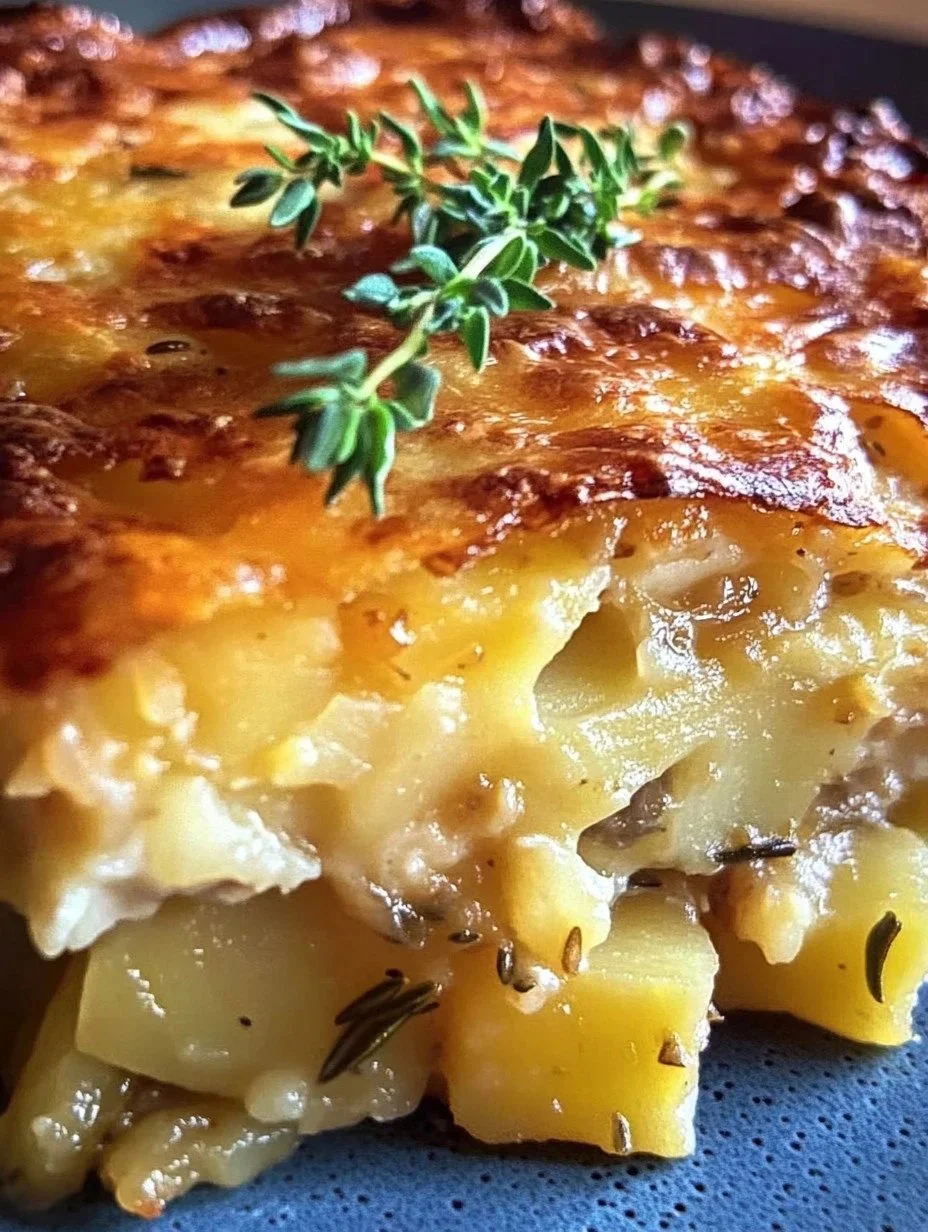
German Potato Cake Recipe — Rustic Comfort
Warm, savory, and with a golden, slightly crisp edge, this German Potato Cake is the kind of dish that smells like home. German Potato Cake is a sturdy, comforting bake that balances mashed potato tenderness with a lightly sweet batter and a toasty crust. I perfected this version while testing variations in a small kitchen and after eight full trials I settled on the balance of potato, egg, and flour that keeps the cake moist without becoming heavy. The method borrows from classic German home baking and a few professional shortcuts so you get reliable results every time. Read on for ingredient notes, exact measurements in both imperial and metric, and pro tips to avoid the usual pitfalls. If you like one-pan comfort baking, you might also enjoy a lighter, sweet contrast like sweet potato pound cake for dessert after this savory main.
Why This Recipe Works
- A high potato-to-flour ratio keeps the crumb tender while eggs provide structure and lift.
- Slightly drier mashed potatoes (cooled and drained) absorb less batter, preventing sogginess.
- Baking in a moderate oven (180°C / 350°F) creates an even rise and a crisp, golden edge.
- A short rest before slicing lets steam escape so the cake holds together.
- Using neutral oil in the pan, not butter, yields a crisp perimeter without burning.
Ingredients Breakdown
- 900 g (2 lb) potatoes, starchy (Russet or Maris Piper): The backbone of the cake. Starchy potatoes break down for a smooth, tender texture. Waxy varieties will make the batter gluey.
- 120 g (1 cup) all-purpose flour: Binds without making the cake dense. Do not substitute with high-protein flour.
- 3 large eggs (~150 g total): Provide structure and richness. If you need an egg-free version, use 120 g silken tofu plus 1 tsp baking powder (see Variations).
- 60 g (1/4 cup) granulated sugar: Balances savory notes and helps with browning.
- 120 ml (1/2 cup) whole milk: Adds moisture and a tender crumb. For a richer result, use buttermilk; reduce baking powder by 1/4 tsp.
- 60 ml (1/4 cup) vegetable oil: Keeps the edges crisp and prevents sticking. Butter can brown too quickly.
- 1 tsp kosher salt (use Diamond Crystal) — if using Morton’s, use 3/4 tsp: Salt enhances flavor; adjust to taste.
- 1 tsp vanilla extract: Subtle background sweetness that rounds the cake’s flavor.
- Zest of 1 lemon (optional): Brightens the flavor; omit for fully savory profile.
- 1 tsp baking powder: Lightly lifts the cake without creating a fluffy sponge.
- Optional garnish: sea salt flakes and chopped chives for a savory finish.
Substitution note: You can substitute Greek yogurt for some milk (replace up to 60 ml), but expect a slightly tangier flavor and a denser crumb.
Essential Equipment
- 23 cm (9-inch) round cake pan, 5 cm (2-inch) deep — the batter volume needs a 9-inch pan to prevent overflow. If you only have an 8-inch pan, use a shallow pie plate and reduce bake time by 5–8 minutes.
- Mixing bowls (large and medium).
- Potato masher or ricer — a ricer gives the smoothest texture; a masher is fine.
- Whisk and rubber spatula.
- Kitchen scale for accurate dry measurements (recommended).
- Instant-read thermometer (helpful for checking doneness).
If you don’t have a ricer, press very hot, peeled potatoes through a fine sieve to remove lumps. For tips on mixing delicate batters, see this Biscoff cookie butter cheesecake method for gentle folding ideas.
Step-by-Step Instructions
This recipe makes 6 servings. Prep time: 20 minutes. Cook time: 40 minutes. Inactive time: None. Total time: 1 hour.
Step 1: Cook and cool the potatoes
Place 900 g (2 lb) whole, peeled potatoes in cold water and bring to a simmer; cook until fork-tender, 15–20 minutes. Drain and let steam-dry for 5 minutes, then mash while hot until smooth.
Step 2: Measure and cool mashed potato
Weigh or measure 650 g (about 3 cups) of mashed potato into a bowl; allow to cool to warm (not hot), about 10 minutes. Cooling prevents eggs from scrambling when mixed.
Step 3: Mix wet ingredients
Whisk together 3 large eggs (150 g), 120 ml (1/2 cup) whole milk, 60 ml (1/4 cup) vegetable oil, 60 g (1/4 cup) sugar, 1 tsp vanilla, and lemon zest until combined, about 30 seconds.
Step 4: Combine potato and wet mixture
Fold the egg mixture into the cooled mashed potatoes with a spatula until mostly smooth, about 1 minute. Do not overmix — a few tiny lumps are fine.
Step 5: Add dry ingredients
Sift together 120 g (1 cup) all-purpose flour, 1 tsp baking powder, and 1 tsp kosher salt. Fold into the potato mixture until just incorporated, 20–30 seconds. Stop as soon as no dry flour is visible.
Step 6: Prepare pan and bake
Preheat oven to 180°C (350°F). Grease the 23 cm (9-inch) pan with 1 tbsp oil and dust lightly with flour. Transfer batter and smooth the top. Bake until golden and a skewer comes out clean, 35–40 minutes, rotating pan once at 20 minutes for even color.
Step 7: Rest and serve
Let the cake rest in the pan for 10 minutes, then run a knife around the edge, invert onto a rack, and cool 10 minutes more before slicing. Sprinkle with sea salt flakes and chives if using. Internal doneness cue: the center should register about 88°C (190°F) and feel set.
Expert Tips & Pro Techniques
- Common mistake — wet potatoes: Avoid excess water in mashed potatoes. After draining, return potatoes to the hot pot and shake over low heat for 1–2 minutes to drive off moisture.
- Use room-temperature eggs to ensure even mixing and better rise.
- For a silkier crumb, push hot potatoes through a ricer; for a rustic texture, mash lightly.
- Make-ahead: Bake the cake, cool completely, wrap tightly, and refrigerate up to 3 days. Reheat at 160°C (325°F) for 10–12 minutes.
- Professional trick: Fold wet ingredients into the potato in two stages to avoid overworking the batter and to maintain airiness.
- If the edges brown too fast, tent loosely with foil at the 25-minute mark.
- For crispier sides, brush the pan bottom with 1 tsp oil and heat it in the oven for 3 minutes before adding batter.
For an extra layer idea inspired by desserts that balance texture, consider the technique used in Biscoff cookie butter cheesecake for pre-baking a flavored crust before filling.
Storage & Reheating
- Refrigerator: Store cooled cake in an airtight container or wrapped tightly in plastic for up to 3 days.
- Freezer: Wrap slices tightly in plastic and then foil. Freeze up to 2 months. Thaw overnight in the refrigerator.
- Reheating: Reheat slices in a 175°C (350°F) oven for 10–12 minutes to restore crisp edges. Avoid microwaving for long — it makes the crust soft.
Variations & Substitutions
- Gluten-Free Version: Replace 120 g all-purpose flour with a 1:1 gluten-free blend (120 g) and add 1/4 tsp xanthan gum. Baking time may increase by 3–5 minutes.
- Savory Herb & Onion: Sauté 1 small onion (about 80 g) until translucent (5–6 minutes) and fold into batter. Reduce sugar to 1 tbsp (12 g) for a less sweet finish.
- Egg-Free Version: Use 120 g silken tofu blended until smooth plus 1 tsp baking powder; expect a slightly denser crumb and a 5–7 minute longer bake.
- Sweet Potato Cake: Substitute 900 g sweet potatoes, mash well, and increase sugar to 80 g (1/3 cup) for a sweeter profile; bake the same time.
- Lemon & Poppy Seed: Keep all measurements the same but add 2 tbsp poppy seeds and 2 tsp lemon zest for a bright finish.
Serving Suggestions & Pairings
- Serve warm with a dollop of sour cream and chives and a simple green salad for a light meal.
- Pair with braised sausages and mustard for a heartier plate.
- For dessert contrast, follow this with a light cake like Black Velvet Cake to balance savory richness.
- Garnish ideas: flaky sea salt, chopped parsley, or a smear of grainy mustard.
Nutrition Information
Per serving (Serving size: 1 slice; recipe makes 6 servings)
- Calories: 330 kcal
- Total Fat: 12 g
- Saturated Fat: 2.5 g
- Cholesterol: 70 mg
- Sodium: 420 mg
- Total Carbohydrates: 45 g
- Dietary Fiber: 3 g
- Sugars: 4 g
- Protein: 6 g
Nutrition values are estimates. Actual values may vary based on specific ingredients and preparation methods.
Frequently Asked Questions
Q: Why did my potato cake turn out dense or gummy?
A: Excess moisture in the potatoes often causes this. Drain well and steam-dry the potatoes for 3–5 minutes before mashing. Use starchy potatoes and avoid overmixing.
Q: Can I make this without eggs?
A: Yes. Replace eggs with 120 g blended silken tofu plus 1 tsp baking powder. Baking time may increase slightly. The texture will be a bit denser.
Q: Can I double this recipe?
A: Yes—double all ingredients and bake in a 23 x 33 cm (9 x 13-inch) pan. Baking time may increase by 8–12 minutes; check with a skewer.
Q: Can I prepare this the night before?
A: You can mix the batter and refrigerate it overnight. Bring it to room temperature for 30 minutes before baking; you may need to add 2–3 minutes to the bake time.
Q: How long does this keep in the fridge?
A: Store in an airtight container for up to 3 days. Reheat in a 175°C (350°F) oven for 10–12 minutes.
Q: Is this similar to potato kugel or Kartoffelpuffer?
A: It shares elements with both: potato kugel is usually a savory baked casserole, while Kartoffelpuffer are grated potato pancakes. This cake blends mashed-potato tenderness with a cake-like bake.
Q: Can I add cheese to the batter?
A: Yes — fold in 60–80 g (1/2–3/4 cup) grated cheese like Gruyère or cheddar. Reduce salt slightly and watch for faster browning.
Conclusion
If you want a crisp-edged, tender German potato cake that holds together and tastes like comfort, this method delivers consistent results with simple pantry ingredients. For another take on German potato traditions, see this classic Kartoffelpuffer (German Potato Pancakes) recipe at The Daring Gourmet, and for a sweet, coffee-flavored potato bake that showcases potatoes in desserts, read about the German Potato Coffee Cake at The Quirk and the Cool.
Print
German Potato Cake
- Total Time: 60 minutes
- Yield: 6 servings 1x
- Diet: Vegetarian
Description
A warm, savory German Potato Cake with a golden, slightly crisp edge, combining mashed potato tenderness with a lightly sweet batter.
Ingredients
- 900 g (2 lb) starchy potatoes (Russet or Maris Piper)
- 120 g (1 cup) all-purpose flour
- 3 large eggs (~150 g total)
- 60 g (1/4 cup) granulated sugar
- 120 ml (1/2 cup) whole milk
- 60 ml (1/4 cup) vegetable oil
- 1 tsp kosher salt
- 1 tsp vanilla extract
- Zest of 1 lemon (optional)
- 1 tsp baking powder
- Optional garnish: sea salt flakes and chopped chives
Instructions
- Place 900 g whole, peeled potatoes in cold water and bring to a simmer; cook until fork-tender, 15–20 minutes. Drain and let steam-dry for 5 minutes, then mash while hot until smooth.
- Weigh or measure 650 g of mashed potato into a bowl; allow to cool to warm, about 10 minutes.
- Whisk together eggs, whole milk, vegetable oil, sugar, vanilla, and lemon zest until combined, about 30 seconds.
- Fold the egg mixture into the cooled mashed potatoes with a spatula until mostly smooth, about 1 minute.
- Sift together flour, baking powder, and salt. Fold into the potato mixture until just incorporated, 20–30 seconds.
- Preheat oven to 180°C (350°F). Grease the 23 cm pan with 1 tbsp oil and dust lightly with flour. Transfer batter and smooth the top. Bake until golden, 35–40 minutes.
- Let the cake rest in the pan for 10 minutes, then invert onto a rack, and cool for 10 minutes before slicing. Sprinkle with sea salt and chives if using.
Notes
For an egg-free version, use silken tofu, and for a gluten-free version, replace flour with a gluten-free blend.
- Prep Time: 20 minutes
- Cook Time: 40 minutes
- Category: Main Course
- Method: Baking
- Cuisine: German
Nutrition
- Serving Size: 1 slice
- Calories: 330
- Sugar: 4g
- Sodium: 420mg
- Fat: 12g
- Saturated Fat: 2.5g
- Unsaturated Fat: 8g
- Trans Fat: 0g
- Carbohydrates: 45g
- Fiber: 3g
- Protein: 6g
- Cholesterol: 70mg