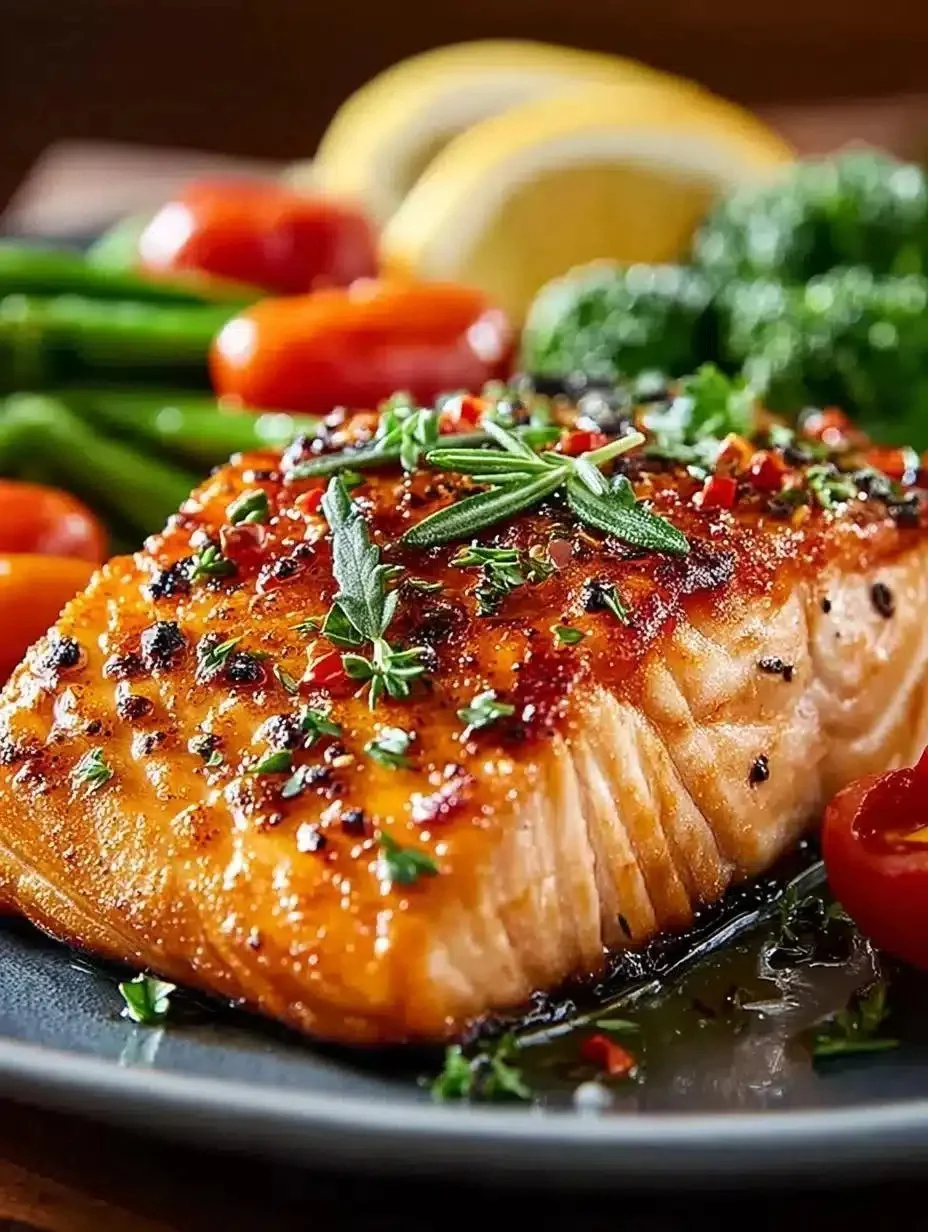
Copycat Herb-Crusted Salmon You Can Make at Home
The Texas Roadhouse Salmon tastes like buttered, herb-crusted perfection with a bright lemon finish, and you can make it in your kitchen tonight — Texas Roadhouse Salmon is the secret to that familiar flavor. After testing this version eight times and adjusting herb ratios and pan heat, I landed on a method that gives crisp edges and a flaky center every time. This recipe is streamlined for home cooks: short prep, pantry-friendly ingredients, and a clear fail-safe sear. If you want a fast weeknight winner or an impressive date-night main, read on for exact measurements, pro tips, and make-ahead options that save time without cutting flavor. You’ll also find a few smart swaps for dietary needs and links to helpful side-dish ideas so you can plate a full meal easily.
Why This Recipe Works
- The herb-parsley crust combines panko and butter to create a toasty, golden exterior that resists sogginess.
- Relying on a hot cast-iron pan develops a focused sear that locks juices, producing flaky, moist salmon.
- A brief oven finish ensures even doneness without overcooking the center.
- Brining (optional) lightly seasons the fish and firms the flesh for better texture.
- Precise temperatures and internal temp cues prevent the common dry-salmon problem.
Ingredients Breakdown
- Salmon fillets: 4 x 170 g (6 oz) skin-on fillets. Skin-on gives a crisp base; buy center-cut for even thickness.
- Kosher salt: 1 tsp (5 g) for seasoning (use Diamond Crystal; if using Morton’s, halve to 2.5 g). Salt balances flavor and firms the fish.
- Freshly ground black pepper: ¼ tsp (1 g). Add at the end to preserve aroma.
- Unsalted butter: 45 g (3 tbsp), melted — binds the herb crust and browns nicely.
- Panko breadcrumbs: 60 g (¾ cup) — lighter than regular crumbs and gives a flaky crunch.
- Fresh parsley: 15 g (⅓ cup packed), finely chopped — primary herb for freshness.
- Fresh dill or chives: 10 g (2 tbsp), chopped — optional but recommended for brightness.
- Lemon zest: 1 tsp (2 g) — adds aroma and acidity without extra liquid.
- Dijon mustard: 15 g (1 tbsp) — thin layer under the crust helps adhere and adds tang.
- Olive oil: 15 ml (1 tbsp) for pan sear.
- Optional: 120 ml (½ cup) low-sodium chicken broth or dry white wine for deglazing if you make a quick pan sauce.
Substitutions with impact warnings:
- Swap panko for regular breadcrumbs — result will be denser and less crisp.
- Use olive oil instead of butter in the crust for dairy-free; flavor will be less rich.
- For gluten-free: use 60 g (¾ cup) gluten-free panko blend — texture may be slightly crumblier.
Essential Equipment
- 25–28 cm (10–11 inch) cast-iron or heavy stainless-steel skillet — holds heat for a solid sear. If you don’t have cast iron, use a heavy nonstick pan and lower the heat by 1 step.
- Ovenproof instant-read thermometer — critical to hit precise doneness.
- Small mixing bowl and rubber spatula for the crust.
- Baking sheet lined with foil or parchment for finishing in the oven.
- Fish spatula or thin flexible spatula for easy flipping.
Step-by-Step Instructions
This recipe makes 4 servings. Prep time 10 minutes, cook time 12–14 minutes, inactive time 0 minutes, total time about 22–24 minutes.
Step 1: Dry and season the fillets
Pat 4 x 170 g (6 oz) skin-on salmon fillets dry with paper towels to remove surface moisture, and season both sides with 1 tsp (5 g) kosher salt and ¼ tsp (1 g) black pepper. Let sit at room temperature for 5 minutes to take the chill off; this helps even cooking.
Step 2: Make the herb-panko crust
In a small bowl, combine 60 g (¾ cup) panko, 45 g (3 tbsp) melted unsalted butter, 15 g (⅓ cup) chopped fresh parsley, 10 g (2 tbsp) dill or chives, and 1 tsp (2 g) lemon zest. Mix until the crumbs are evenly moistened — the mixture should hold together lightly when pressed. Do not oversaturate the crumbs; they should stay loose.
Step 3: Apply mustard and crust
Brush the top (not the skin) of each fillet with 15 g (1 tbsp) Dijon mustard, then press 45–60 g (about 2–3 tbsp) of the panko-herb mixture onto each fillet to form an even layer. Work gently to avoid pressing crumbs onto the skin. Press just enough for adhesion — compacting too hard will slow cooking.
Step 4: Heat the pan and sear skin
Preheat oven to 200°C (400°F). Heat 15 ml (1 tbsp) olive oil in the skillet over medium-high heat until shimmering, about 1–2 minutes. Place salmon fillets skin-side down and sear for 3–4 minutes, pressing gently with a spatula so the skin makes full contact — cook until the skin is deeply golden and releases easily from the pan.
Step 5: Finish in the oven
Transfer the skillet or move fillets to a baking sheet and bake at 200°C (400°F) for 6–8 minutes, or until the crust is golden and the internal temperature reads 52–54°C (125–130°F) for medium-rare or 57–60°C (135–140°F) for medium. Remove from oven and rest 2 minutes; carryover heat will bring the internal temp up ~2–3°C (4–6°F). Do not overcook — salmon continues to firm as it rests.
Step 6: Optional pan sauce and serve
If desired, after removing the salmon, deglaze the pan with 120 ml (½ cup) chicken broth or dry white wine over medium heat, scraping up brown bits, and whisk in 15 g (1 tbsp) butter to finish. Spoon a little sauce over the fillets and serve immediately with lemon wedges.
Expert Tips & Pro Techniques
- Common mistake and fix: Overcrowding the pan cools the surface and prevents a good sear. Cook in batches if needed.
- Use an instant-read thermometer to avoid guesswork; pull salmon at 52–54°C (125–130°F) for moist flakes.
- Make-ahead: Mix the panko-herb topping up to 2 days ahead and refrigerate in an airtight container; bring to room temperature before using.
- Professional trick for even cooking: Press a small piece of foil on the thickest part of each fillet during sear to keep contact with the pan.
- To get ultra-crispy skin, salt the skin side 20–30 minutes before cooking and pat dry again just before searing.
- Adapt a restaurant technique at home: Finish under the broiler for 30–45 seconds if the crust needs extra color — watch closely to avoid burning.
Storage & Reheating
- Refrigerator: Store cooled salmon in an airtight container for up to 3 days. Keep crusted side up to preserve texture.
- Freezer: This dish is best fresh; you can freeze cooked fillets wrapped tightly in plastic and foil for up to 1 month. Thaw overnight in the fridge. Note that the crust softens after freezing and reheating.
- Reheating: Reheat in a 175°C (350°F) oven for 8–10 minutes until warmed through and internal temp reaches 54–57°C (130–135°F). Avoid microwaving — it will make the crust soggy.
Variations & Substitutions
- Dairy-free: Replace the 45 g (3 tbsp) melted butter with 30 ml (2 tbsp) extra-virgin olive oil in the crust. Keep the Dijon for adhesion. Cook as directed; flavor will be slightly less rich.
- Gluten-free: Use 60 g (¾ cup) gluten-free panko; texture is similar but may brown faster — reduce oven time by 1–2 minutes and monitor color.
- Spicy herb crust: Add ½ tsp smoked paprika and ⅛ tsp cayenne to the panko mixture; everything else stays the same.
- Air-fryer method: For a 4-filet batch, preheat air fryer to 200°C (400°F) and cook skin-side down for 6–8 minutes until internal temp 52–57°C (125–135°F). This cuts total cook time and works well if you prefer less stovetop cooking. See more beginner air fryer recipes for equipment tips.
- Leftover salmon repurpose: Flake cooked salmon into warmed mashed potatoes or salads. Try this recipe as a shortcut in a salmon patties recipe when you have extras.
Serving Suggestions & Pairings
- Classic sides: Serve with garlic mashed potatoes and steamed asparagus for a restaurant-style plate. For an air-fried side, try cheesy mashed potato balls for fun finger food.
- Light salads: Arugula with lemon vinaigrette and shaved Parmesan balances the richness.
- Beverage pairing: A unoaked Chardonnay or a dry Riesling cuts through the buttery crust. For a nonalcoholic choice, sparkling water with lemon works well.
- Weeknight shortcut: Pair with quick roasted baby potatoes and a green salad; for more easy options, browse these air fryer family meal recipes for ideas.
Nutrition Information
(Per serving — Serving size: 1 fillet; recipe makes 4 servings)
- Calories: 420 kcal
- Total Fat: 26 g
- Saturated Fat: 9 g
- Cholesterol: 110 mg
- Sodium: 420 mg
- Total Carbohydrates: 8 g
- Dietary Fiber: 1 g
- Sugars: 1 g
- Protein: 36 g
Nutrition values are estimates. Actual values may vary based on specific ingredients and preparation methods.
Frequently Asked Questions
Q: Why did my salmon turn out dry?
A: Likely overcooking. Use an instant-read thermometer and remove the fish at 52–54°C (125–130°F) for medium-rare; it will finish while resting.
Q: Can I make this without butter?
A: Yes. Replace melted butter in the crust with 30 ml (2 tbsp) olive oil for a dairy-free version; the crust will be slightly less rich but still crisp.
Q: Can I double this recipe for a party?
A: Yes. Cook in batches to avoid overcrowding the pan, or use two skillets simultaneously. Keep cooked fillets loosely tented with foil in a 100°C (210°F) oven for up to 15 minutes.
Q: Can I prepare this the night before?
A: You can mix the herb-panko topping and store it in the fridge overnight. Apply just before cooking to keep the crumbs from sogging.
Q: How long does this keep in the fridge?
A: Store cooked salmon in an airtight container for up to 3 days. Reheat gently in a 175°C (350°F) oven for best texture.
Q: Is skin-on really necessary?
A: Skin helps protect the flesh during cooking and crisps to add contrast. If you prefer skinless, reduce searing time by 30–60 seconds and watch for doneness.
Q: Can I use frozen salmon?
A: Thaw fully in the fridge and pat dry before cooking. Cooking from frozen risks uneven doneness and a soggy crust.
Conclusion
If you want another home-tested take on the same restaurant-style flavor, check this Texas Roadhouse Salmon – The Food Hussy for a complementary approach, and if you like herb-crusted proteins, try this Texas Roadhouse Herb Crusted Chicken Copycat Recipe for a poultry variation.
Print
Copycat Herb-Crusted Salmon
- Total Time: 24 minutes
- Yield: 4 servings 1x
- Diet: Paleo
Description
This copycat recipe replicates the delicious herb-crusted salmon from Texas Roadhouse, perfect for a quick weeknight dinner or an impressive date-night meal.
Ingredients
- 4 x 170 g (6 oz) skin-on salmon fillets
- 1 tsp (5 g) kosher salt
- ¼ tsp (1 g) freshly ground black pepper
- 45 g (3 tbsp) unsalted butter, melted
- 60 g (¾ cup) panko breadcrumbs
- 15 g (⅓ cup packed) fresh parsley, finely chopped
- 10 g (2 tbsp) fresh dill or chives, chopped
- 1 tsp (2 g) lemon zest
- 15 g (1 tbsp) Dijon mustard
- 15 ml (1 tbsp) olive oil
- Optional: 120 ml (½ cup) low-sodium chicken broth or dry white wine
Instructions
- Pat salmon fillets dry with paper towels and season with salt and pepper. Let sit at room temperature for 5 minutes.
- Combine panko, melted butter, parsley, dill, and lemon zest in a bowl. Mix until evenly moistened.
- Brush each fillet with Dijon mustard and press the panko mixture on top.
- Heat olive oil in a skillet over medium-high heat, then sear fillets skin-side down for 3-4 minutes.
- Transfer fillets to the oven or a baking sheet and bake at 200°C (400°F) for 6-8 minutes until the crust is golden.
- Remove from oven and let rest for 2 minutes before serving.
Notes
For perfect texture, avoid overcrowding the pan while cooking. Adjust herb quantities according to taste.
- Prep Time: 10 minutes
- Cook Time: 14 minutes
- Category: Main Course
- Method: Baking
- Cuisine: American
Nutrition
- Serving Size: 1 fillet
- Calories: 420
- Sugar: 1g
- Sodium: 420mg
- Fat: 26g
- Saturated Fat: 9g
- Unsaturated Fat: 15g
- Trans Fat: 0g
- Carbohydrates: 8g
- Fiber: 1g
- Protein: 36g
- Cholesterol: 110mg