
Street Style Thai Noodles — Easy Weeknight Stir-Fry
Bright, caramelized noodles hit the tongue first—smoky soy, tangy tamarind, and a pop of chili. Street style Thai noodles are quick, bold, and built on contrast: soft rice noodles, crisp vegetables, and a sweet-sour sauce. I perfected this version over many late-night test cooks in a busy kitchen and after testing it 10 times at home I locked the balance between sweetness, acidity, and char. This recipe uses pantry staples and a simple wok technique so you get authentic char without fancy equipment. If you like quick stir-fries, try this and then explore similar brothy bowls like Thai chicken soup noodles for colder nights. Read on for why this works, exact timings, and pro tips to get restaurant-level results.
Why This Recipe Works
- High heat and a hot pan create the char that mimics street stalls. The slight smoky flavor is essential.
- Rice noodles soak and then flash-fry; this keeps them tender but not mushy.
- A balance of tamarind (acid), sugar (sweet), and fish sauce (umami) gives classic Thai depth.
- Egg and crisp greens add texture contrast, which keeps each bite interesting.
- Quick tossing keeps the sauce clinging to noodles, not pooling on the plate.
Ingredients Breakdown
- Rice noodles (200 g / 7 oz dried wide rice noodles): The backbone. Soak to soften, then toss hot so they pick up sauce. Do not boil them—boiling makes them gummy.
- Neutral oil (2 tbsp / 30 ml): Use peanut or vegetable oil for high heat. Sesame oil is for finishing only.
- Garlic (3 cloves, minced): Adds savory aromatics. Use fresh — powdered garlic won’t give the same lift.
- Eggs (2 large): Add protein and silkiness. For vegan swap, omit and add 150 g (5 oz) firm tofu, pressed and cubed.
- Chinese broccoli or regular broccoli (150 g / 5 oz): Greens give crunch and color. Spinach wilts too fast; use only at the end.
- Fish sauce (2 tbsp / 30 ml): Key salty-umami element. For vegetarian version use soy sauce + 1 tsp mushroom seasoning.
- Tamarind paste (1 tbsp / 15 ml) or lime juice (2 tbsp / 30 ml): Tamarind gives the classic tang; lime works but is brighter and less caramel-like.
- Palm sugar or light brown sugar (2 tbsp / 25 g): Balances the acid and salt. Brown sugar is fine but slightly deeper caramel if using palm sugar.
- Dark soy sauce (1 tbsp / 15 ml): Adds color and a touch of sweetness. Light soy could replace it but noodles will be paler.
- Chili flakes or fresh chiles (to taste): For heat. Adjust to your tolerance.
- Scallions and cilantro for garnish: Fresh finish and aroma.
Substitutions with impact warnings:
- Rice noodles: Do not use spaghetti; wheat pasta changes texture and soaks oil.
- Fish sauce: Use soy sauce for vegetarian, but you will lose briny depth. Add ½ tsp seaweed powder if you want more ocean notes.
- Salt brand note: Use Diamond Crystal kosher salt if available; if you use Morton’s, reduce volume by about 30% because it’s denser.
Essential Equipment
- 12-inch (30 cm) wok or large heavy skillet: A wok gives the best char. Use a wide skillet if you don’t have one.
- Tongs or long wooden spatula for tossing noodles quickly.
- Measuring spoons and a digital scale for accurate dry measurements.
- Small bowl for mixing sauce.
- Mesh strainer to drain soaked noodles quickly.
If you don’t have a wok, use the largest skillet you own and work in smaller batches to keep pan temperature high.
Step-by-Step Instructions
Prep Time: 15 minutes | Cook Time: 12–15 minutes | Inactive Time: 10–15 minutes (noodle soak) | Total Time: 40 minutes | Servings: 4
Step 1: Soak the rice noodles
Place 200 g (7 oz) dried wide rice noodles in a large bowl and cover with warm water 38–40°C (100–105°F). Soak for 10–15 minutes until pliable but still slightly firm in the center. Drain and set aside; they will finish cooking in the wok.
Step 2: Make the sauce
Whisk 2 tbsp (30 ml) fish sauce, 1 tbsp (15 ml) tamarind paste, 2 tbsp (25 g) palm or light brown sugar, and 1 tbsp (15 ml) dark soy sauce in a small bowl. Taste for balance — it should be tangy, salty, and slightly sweet. Adjust 30 seconds.
Step 3: Heat the wok and aromatics
Heat the wok over high heat until a bead of water sizzles away, about 2 minutes. Add 2 tbsp (30 ml) neutral oil and 3 minced garlic cloves; stir-fry for 20–30 seconds until fragrant but not brown. Keep motion steady.
Step 4: Add protein and greens
Push garlic to the side, crack in 2 large eggs and scramble quickly for 20–30 seconds until almost set. Add 150 g (5 oz) Chinese broccoli or broccoli florets and stir-fry for 1–2 minutes until stems are bright and slightly tender.
Step 5: Toss in noodles and sauce
Add drained noodles and the prepared sauce to the wok. Toss continuously for 2–3 minutes, using tongs, until noodles are heated through and sauce is absorbed. Work fast to get a light char on edges.
Step 6: Finish with aromatics and heat
Add 2 sliced scallions and a pinch of chili flakes; toss 30 seconds. Turn off heat and drizzle 1 tsp (5 ml) toasted sesame oil if desired. Taste and adjust with a splash more fish sauce or ½ tsp sugar for balance.
Step 7: Plate and garnish
Serve immediately with lime wedges, fresh cilantro, and extra crushed chilies on the side. Garnish each plate with a wedge of lime so diners can adjust acidity.
Expert Tips & Pro Techniques
- Use high heat. The char comes from quick contact at high temperature. Preheat the wok for at least 2 minutes.
- Avoid over-soaking noodles. If they get too soft, they will break and become mushy when tossed. Soak until just pliable.
- Common mistake: overcrowding the pan lowers temperature and steams the ingredients. Cook in two batches for truly charred noodles.
- Make-ahead: Mix the sauce and chop aromatics up to 24 hours ahead. Keep in airtight containers in the fridge. Soak noodles up to 1 hour ahead, drain well, and toss with 1 tsp oil to stop sticking.
- Professional technique for home cooks: Finish by pressing noodles lightly against the pan with a spatula for 10–20 seconds to create a blistered, smoky surface. Do this once per batch.
- If you want more depth, add 1 tsp soy caramelized garlic oil (store-bought or homemade) at the end.
Storage & Reheating
- Refrigerator: Store cooled noodles in an airtight container for up to 3 days. Avoid adding fresh herbs until serving.
- Freezer: Not recommended — rice noodles change texture when frozen and reheated. If you must, freeze for up to 1 month in single-serve portions; thaw overnight in the fridge.
- Reheating: Reheat in a hot skillet over medium-high heat with 1 tsp oil, tossing for 3–4 minutes until steaming. Alternatively, microwave covered for 60–90 seconds, then toss in a hot skillet for 30–60 seconds to revive texture. Avoid long microwave reheats alone — they make noodles soggy.
Variations & Substitutions
- Vegan Version: Replace fish sauce with 3 tbsp (45 ml) soy sauce + 1 tsp mushroom powder; omit eggs and add 200 g (7 oz) firm tofu, cubed. Cook tofu first until golden, then follow recipe.
- Pad See Ew Style: Swap tamarind for 1 tbsp (15 ml) black bean soy sauce (or extra dark soy) and increase sugar to 3 tbsp (38 g) for that sweeter, darker finish. Keep other steps identical.
- Gluten-Free: Ensure all soy sauces are gluten-free tamari; most rice noodles are naturally gluten-free. No further time changes required.
- Chicken or Shrimp: Add 300 g (10 oz) sliced chicken breast or shrimp. Sear first 2–3 minutes until cooked through, remove, then add back at the end to combine.
- Lower Sodium: Reduce fish sauce to 1 tbsp (15 ml) and add ½ tsp seaweed powder or 1 tbsp (15 ml) low-sodium soy to retain umami.
Serving Suggestions & Pairings
- Serve with a simple cucumber relish to cut richness.
- Pair with a light beer or an off-dry Riesling to balance heat.
- For a full meal, pair with our crisp roasted potatoes or a warm broth like bakery-style blueberry white (use as a sweet bread side for contrast).
- Garnish with crushed peanuts and extra lime for texture and brightness.
Nutrition Information
Per serving (Serving size: about 1 bowl; recipe makes 4 servings)
- Calories: 560 kcal
- Total Fat: 20 g
- Saturated Fat: 4.5 g
- Cholesterol: 115 mg
- Sodium: 1,250 mg
- Total Carbohydrates: 72 g
- Dietary Fiber: 4 g
- Sugars: 10 g
- Protein: 18 g
Nutrition values are estimates. Actual values may vary based on specific ingredients and preparation methods.
Frequently Asked Questions
Q: Why did my noodles turn out gummy?
A: They were likely over-soaked or over-stirred. Soak until just pliable (10–15 minutes). Toss quickly over very high heat to finish.
Q: Can I make this without eggs?
A: Yes. Omit eggs and add 150–200 g (5–7 oz) firm tofu or extra vegetables. You lose some silkiness but keep texture with tofu.
Q: Can I double this recipe for a party?
A: You can, but cook in batches. Doubling in one pan cools the surface and prevents charring. Use two pans if possible.
Q: Can I prepare this the night before?
A: Prep sauce and chop ingredients ahead up to 24 hours. Soak noodles only up to 1 hour ahead and keep them lightly oiled. Best to cook just before serving.
Q: How long does this keep in the fridge?
A: Stored airtight, it keeps 2–3 days. Reheat quickly in a hot pan to refresh texture.
Q: What’s the best noodle to use?
A: Wide rice noodles (sen yai or similar) give the classic texture. Narrow rice noodles work but will be silkier and may clump.
Q: How do I get that smoky wok flavor at home?
A: Use a heavy pan on the highest heat your stove allows, preheat well, and don’t overcrowd. Finish by pressing noodles briefly against the pan to get small charred patches.
Conclusion
Street style Thai noodles are fast, flexible, and full of flavor. If you want a different take on Thai street food, try the classic Pad See Ew technique or a chicken-forward street noodle plate for contrast. For a timeless Pad See Ew recipe, see RecipeTin Eats’ Pad See Ew recipe, and for a richer chicken street noodle inspiration check out How Sweet Eats’ Thai-Style Chicken Street Noodles.
Print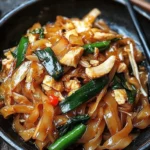
Street Style Thai Noodles
- Total Time: 40 minutes
- Yield: 4 servings 1x
- Diet: Vegetarian
Description
Bright, caramelized street style Thai noodles with smoked soy, tangy tamarind, and crisp vegetables for a quick weeknight stir-fry.
Ingredients
- 200 g (7 oz) dried wide rice noodles
- 2 tbsp (30 ml) neutral oil
- 3 cloves garlic, minced
- 2 large eggs
- 150 g (5 oz) Chinese broccoli or regular broccoli
- 2 tbsp (30 ml) fish sauce
- 1 tbsp (15 ml) tamarind paste
- 2 tbsp (25 g) palm sugar or light brown sugar
- 1 tbsp (15 ml) dark soy sauce
- Chili flakes or fresh chiles (to taste)
- Scallions and cilantro for garnish
Instructions
- Soak the rice noodles in warm water for 10–15 minutes until pliable. Drain and set aside.
- Whisk together fish sauce, tamarind paste, palm sugar, and dark soy sauce in a small bowl.
- Heat the wok over high heat, add oil and garlic, and stir-fry until fragrant.
- Push garlic to the side, scramble the eggs, and stir-fry with broccoli until tender.
- Add noodles and sauce, tossing continuously for a few minutes until noodles are heated through and sauce is absorbed.
- Add scallions and chili flakes, toss for 30 seconds, and finish with sesame oil if desired.
- Plate and garnish with lime wedges, cilantro, and crushed chilies.
Notes
Use high heat to achieve char. Avoid over-soaking the noodles.
- Prep Time: 15 minutes
- Cook Time: 15 minutes
- Category: Main Course
- Method: Stir-frying
- Cuisine: Thai
Nutrition
- Serving Size: 1 serving
- Calories: 560
- Sugar: 10g
- Sodium: 1250mg
- Fat: 20g
- Saturated Fat: 4.5g
- Unsaturated Fat: 15.5g
- Trans Fat: 0g
- Carbohydrates: 72g
- Fiber: 4g
- Protein: 18g
- Cholesterol: 115mg