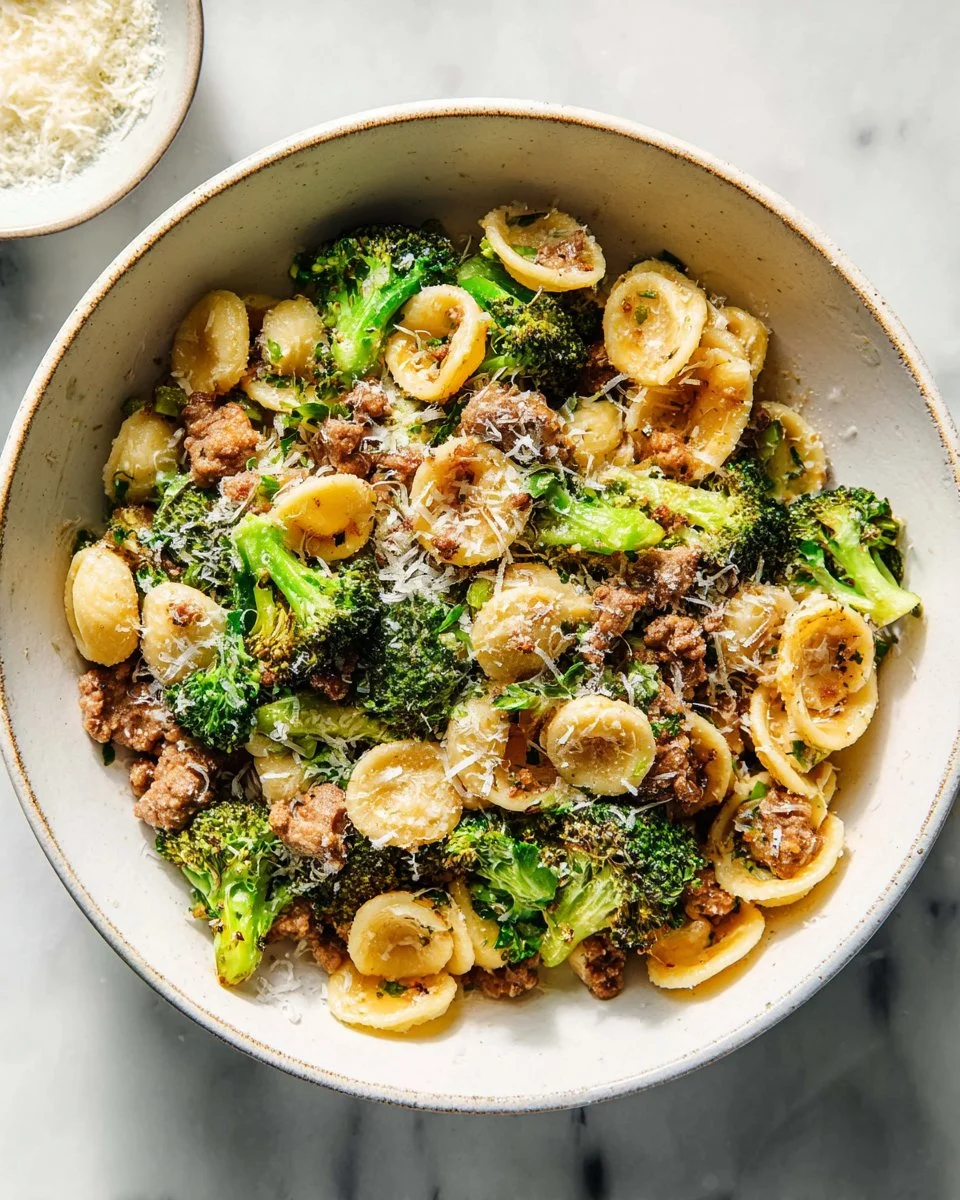
Orecchiette with Sausage and Broccoli — Weeknight Pasta
Warm, garlicky pasta tossed with crunchy broccoli and sweet, browned sausage tastes like comfort in a bowl. Orecchiette with sausage and broccoli sings with texture: the little ear-shaped pasta cups the sauce and bits of sausage. After testing this version eight times at home and refining the timing, I landed on an approach that gives bright broccoli, deeply caramelized sausage, and a silky sauce without cream. This is the version I perfected while developing menus at a neighborhood trattoria. Read on for exact measurements, timing, and simple swaps so you get restaurant results at home.
Why This Recipe Works
- Orecchiette holds tiny sauce pockets; the shape traps sausage crumbs and oil for even flavor in every bite.
- Browning sausage develops Maillard flavor that reads like depth; deglazing with pasta water pulls those browned bits into the sauce.
- Quick-parboiling of broccoli keeps it bright and crisp-tender, avoiding mush.
- Short-cooking pasta (cook to al dente) lets it finish in the pan and absorb sauce without getting soggy.
- A final toss off-heat with olive oil and grated cheese emulsifies a glossy, clingy sauce.
Ingredients Breakdown
- Orecchiette (400 g / 14 oz): The short, cup-like shells cradle sauce. Use bronze-cut orecchiette if possible for extra sauce grip. If using store-brand, cook to the lower end of package time.
- Italian sausage (400 g / 14 oz, casings removed): Sweet or spicy, depending on preference. Browning yields flavor; do not overcrowd the pan or the sausage will steam.
- Broccoli (400 g / 14 oz; about 1 large head, cut into small florets): Small florets cook faster and fit into orecchiette. Larger stems can be peeled and sliced thin.
- Extra-virgin olive oil (60 ml / 4 tbsp): For sautéing and finishing. Use good-quality oil for flavor.
- Garlic (3 cloves, minced): Provides aromatic backbone. Add later to prevent burning.
- Red pepper flakes (optional, 1/4–1/2 tsp): Adds heat; increase if you want spice.
- Lemon (zest and 1 tbsp juice): Brightens the dish; zest adds fragrance.
- Pecorino Romano or Parmesan (60 g / 1/2 cup grated): Adds salty, nutty finish. Pecorino is tangier.
- Pasta water (reserve 240–360 ml / 1–1.5 cups): Starchy water binds sauce and thickens it naturally.
- Kosher salt: Use Diamond Crystal for measuring; if you use Morton’s, halve the amount because it’s denser.
Substitutions and impact warnings: - Turkey or chicken sausage: Leaner and less fatty; you may need 1 tbsp olive oil to compensate.
- Broccoli rabe: More bitter; blanch and briefly shock to tame bitterness.
- Vegetarian option: Use crumbled, firm tofu or a plant-based sausage; increase seasoning and add 1 tbsp soy sauce for umami.
Essential Equipment
- Large pot for boiling pasta (6–8 liters / 6–8 quarts) — enough water prevents sticking.
- Large sauté pan or skillet, 30 cm (12 in) with straight sides — prevents splatter and gives space to toss.
- Colander and a heatproof bowl for holding reserved pasta water.
- Microplane or fine grater for cheese and lemon zest.
- Tongs or pasta fork for tossing.
- Optional: a slotted spoon to transfer pasta directly to the pan.
If you don’t have a large skillet, use a shallow Dutch oven; it holds heat and gives space to toss the pasta.
Step-by-Step Instructions
Prep time: 15 minutes · Cook time: 20 minutes · Inactive time: None · Total time: 35 minutes · Servings: 4
Step 1: Bring the water to a boil
Fill a large pot with 4.5–6 liters (16–24 cups) water and bring to a rolling boil over high heat, about 8–10 minutes. Add 1 tbsp Diamond Crystal kosher salt (or 1.5 tsp Morton’s). The water should taste like the sea.
Step 2: Cook the pasta
Add 400 g (14 oz) orecchiette and stir so pieces don’t stick. Cook until just shy of al dente — about 8–10 minutes depending on brand. Reserve 240–360 ml (1–1.5 cups) pasta water, then drain. Timing: 8–10 minutes; sensory cue: the center should have a tiny white dot when bitten.
Step 3: Brown the sausage
Meanwhile, heat 30 ml (2 tbsp) olive oil in a 30 cm (12 in) skillet over medium-high heat. Add 400 g (14 oz) sausage (casings removed), break into small pieces, and cook until deeply browned, about 6–8 minutes, stirring every 30 seconds. Timing: 6–8 minutes; sensory cue: look for deep golden-brown bits. Do not overcrowd — brown, don’t steam.
Step 4: Add garlic and deglaze
Push the sausage to the side, add 15 ml (1 tbsp) olive oil if the pan is dry, then add 3 minced garlic cloves and 1/4–1/2 tsp red pepper flakes. Cook until fragrant, about 30–45 seconds. Pour in 120–180 ml (1/2–3/4 cup) reserved pasta water and scrape browned bits with a wooden spoon to deglaze. Timing: 30–45 sec for garlic; 30 sec for deglaze.
Step 5: Cook the broccoli
Add 400 g (14 oz) small broccoli florets to the skillet, stir to coat, and cook until crisp-tender, about 3–4 minutes. If pan gets dry, add 2 tbsp pasta water. Sensory cue: broccoli should be bright green and easily pierced with a fork but still have bite.
Step 6: Finish in the pan
Add drained orecchiette to the skillet and toss over medium heat for 1–2 minutes so pasta absorbs the sauce. Add 30–60 ml (2–4 tbsp) pasta water as needed for a glossy sauce. Remove from heat, stir in zest of 1 lemon and 60 g (1/2 cup) grated Pecorino or Parmesan. Taste and adjust salt and pepper. Timing: 1–2 minutes tossing; sensory cue: sauce should cling to pasta and feel silky. Stop tossing once cheese is melted to avoid graininess.
Step 7: Serve immediately
Divide among plates and finish with a drizzle of extra-virgin olive oil and extra cheese. Serve hot.
Expert Tips & Pro Techniques
- Don’t overcook broccoli: blanching steals color and texture. If you prefer blanching, boil florets 1 minute, then shock in ice water before sautéing for 1 minute to reheat.
- Common mistake — under-seasoned pasta water: Salt well; pasta water seasons the whole dish. If you under-salt the water, the final dish will taste flat.
- Make-ahead: Brown the sausage and cook broccoli up to 24 hours ahead. Store separately in airtight containers. Reheat in a skillet with 2–3 tbsp pasta water and finish with cheese.
- Professional trick for glossy sauce: Emulsify by tossing off-heat with a little oil and grated cheese while adding pasta water slowly.
- Low-carb adaptation: Swap orecchiette for blanched broccoli stems or a shirataki pasta (see swap and technique in the Expert Tips link below).
- If you don’t have Pecorino, add 1/4 tsp anchovy paste to the pan for umami instead of cheese.
Try a low-carb swap for different textures and to reduce carbs.
Storage & Reheating
- Refrigerator: Transfer cooled leftovers to an airtight container. Keep up to 3 days. Reheat gently to preserve texture.
- Freezer: Not recommended; pasta with broccoli turns watery. If you must, freeze in a shallow airtight container for up to 1 month. Thaw overnight in the refrigerator.
- Reheating: Reheat in a skillet over medium-low heat with 2–3 tbsp water or reserved sauce until warmed through, about 3–5 minutes. Avoid microwaving when possible; it makes broccoli mushy and pasta gummy.
Variations & Substitutions
- Spicy Sausage Version: Use hot Italian sausage (same quantity). Reduce red pepper flakes to 1/8 tsp. Everything else stays the same.
- Gluten-Free Version: Replace orecchiette with 400 g (14 oz) gluten-free short pasta. Add 1 tbsp olive oil while tossing to prevent clumping. Cook time may vary by brand.
- Vegetarian Version: Use 400 g (14 oz) crumbled firm tofu, 1 tbsp soy sauce, and 1 tsp smoked paprika to mimic sausage flavor; sauté until deeply browned, about 8 minutes.
- Creamy Version: Stir 120 ml (1/2 cup) crème fraîche or heavy cream off-heat for a silkier sauce; finish with lemon zest. Reduce pasta water to 60 ml (1/4 cup).
- Broccoli Rabe Swap: Use broccoli rabe (400 g / 14 oz), blanch 1 minute, shock, and sauté 2–3 minutes; expect a more bitter profile, balance with extra lemon.
Serving Suggestions & Pairings
- Light salad: Arugula with lemon vinaigrette cuts the richness.
- Bread: A crusty country loaf soaks up any sauce.
- Wine: A crisp Italian white like Verdicchio or a light Chianti pairs well.
- Dessert pairing: Try a sweet, playful parfait after this savory meal — a simple parfait keeps the meal festive without heavy dessert.
Also consider pairing with our creamy macaroni variations for crowd-pleasing sides.
Nutrition Information (per serving)
Serving size: about 1 plate · Makes 4 servings
- Calories: 610 kcal
- Total Fat: 28 g
- Saturated Fat: 10 g
- Cholesterol: 75 mg
- Sodium: 820 mg
- Total Carbohydrates: 54 g
- Dietary Fiber: 6 g
- Sugars: 3 g
- Protein: 26 g
Nutrition values are estimates. Actual values may vary based on specific ingredients and preparation methods.
Frequently Asked Questions
Q: Why did my pasta turn out gummy?
A: Probably overcooked pasta or too much water when reheating. Cook to al dente and finish in the pan, adding water sparingly.
Q: Can I make this without eggs?
A: Yes. Most dried pasta is already egg-free. Check the package. For fresh egg pasta, substitute a store-bought dried orecchiette or gluten-free option.
Q: Can I double this recipe?
A: Yes. Use a larger pot and pan and brown the sausage in batches to avoid steaming. Timing per batch stays the same.
Q: Can I prepare this the night before?
A: You can brown the sausage and cook the broccoli up to 24 hours ahead. Refrigerate separately and finish the pasta just before serving.
Q: How long does this keep in the fridge?
A: Store in an airtight container for up to 3 days. Reheat gently on the stove with a splash of water.
Q: My broccoli turned out soggy. How can I avoid that?
A: Cut florets small and cook briefly. Saute over medium-high heat so they crisp and brown slightly. If blanching, only boil 1 minute then shock in ice water.
Q: Can I use pre-cooked sausage or turkey sausage?
A: Pre-cooked sausage works; brown briefly for color. Turkey sausage is leaner — add 1 tbsp olive oil so the pan has enough fat.
Conclusion
If you want a quick, reliable version, my tested method keeps broccoli bright and sausage flavorful while building a glossy, clingy sauce. For a slightly different 30-minute take, see the practical shortcut and timing notes at My Everyday Table’s 30-minute approach. For a traditional regional perspective and alternate ingredient ideas, consult Our Italian Table’s classic recipe notes.
Print
Orecchiette with Sausage and Broccoli
- Total Time: 35 minutes
- Yield: 4 servings 1x
- Diet: Paleo
Description
Warm, garlicky pasta tossed with crunchy broccoli and sweet, browned sausage, perfect for a weeknight dinner.
Ingredients
- 400 g orecchiette
- 400 g Italian sausage, casings removed
- 400 g broccoli, cut into small florets
- 60 ml extra-virgin olive oil
- 3 cloves garlic, minced
- 1/4–1/2 tsp red pepper flakes (optional)
- Zest and 1 tbsp juice of 1 lemon
- 60 g grated Pecorino Romano or Parmesan
- 240–360 ml reserved pasta water
- Kosher salt to taste
Instructions
- Bring a large pot of water to a boil with kosher salt.
- Cook the orecchiette until just shy of al dente, reserving pasta water before draining.
- Heat olive oil in a skillet and brown the sausage.
- Add garlic and red pepper flakes, then deglaze with reserved pasta water.
- Cook the broccoli until crisp-tender.
- Finish by tossing the pasta in the skillet with water, lemon zest, and cheese.
- Serve immediately with extra olive oil and cheese.
Notes
Use good-quality olive oil for the best flavor. Don’t overcook the broccoli to keep it bright and crisp.
- Prep Time: 15 minutes
- Cook Time: 20 minutes
- Category: Main Course
- Method: Sautéing
- Cuisine: Italian
Nutrition
- Serving Size: 1 serving
- Calories: 610
- Sugar: 3g
- Sodium: 820mg
- Fat: 28g
- Saturated Fat: 10g
- Unsaturated Fat: 18g
- Trans Fat: 0g
- Carbohydrates: 54g
- Fiber: 6g
- Protein: 26g
- Cholesterol: 75mg