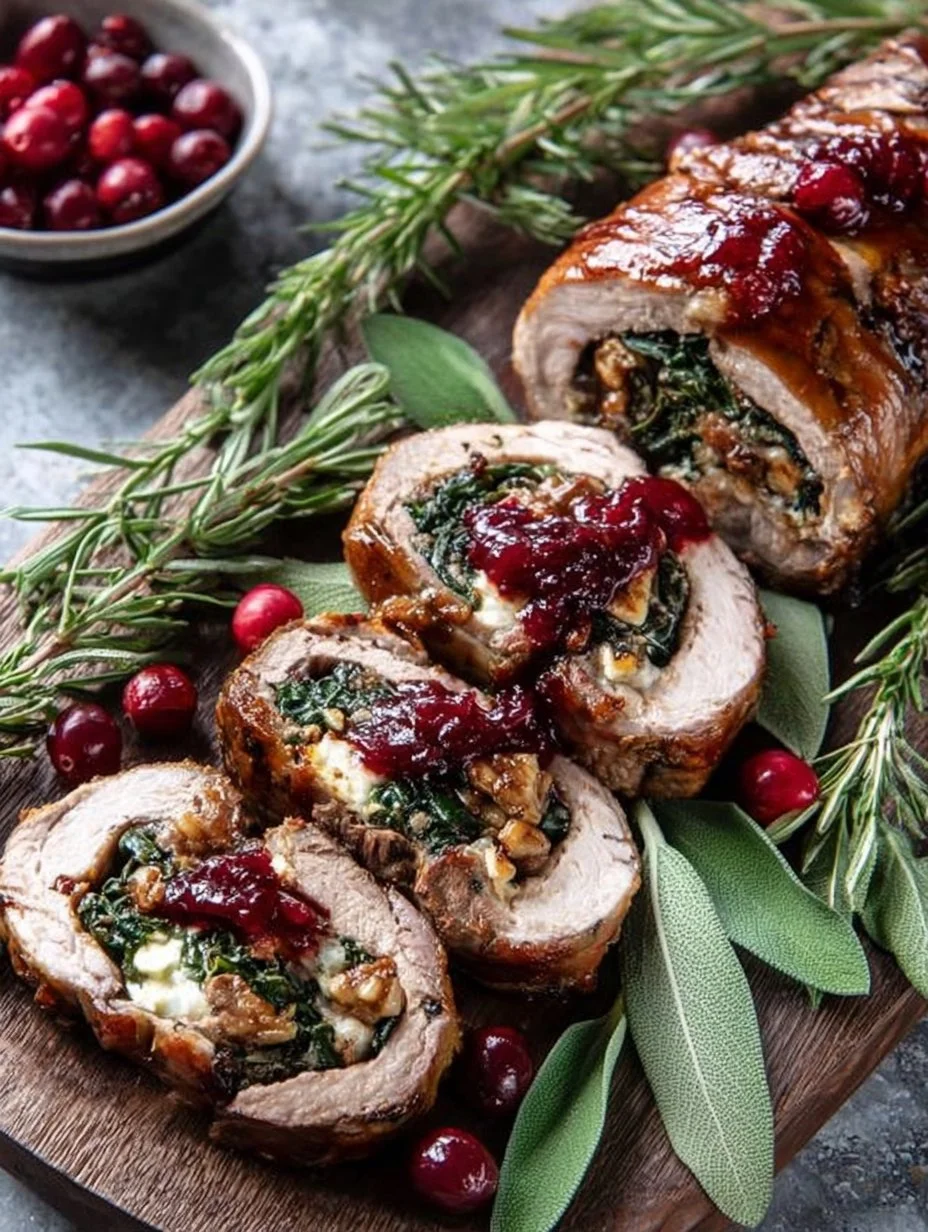
Christmas Stuffed Pork Tenderloin guide: Ready for the most irresistible holiday centerpiece? 🎄🍖
You’ll absolutely love this Christmas Stuffed Pork Tenderloin guide — it’s a game-changing, foolproof approach that turns a simple pork tenderloin into an incredible holiday star in under an hour. Whether you’re cooking for a cozy family dinner or hosting an enthusiastic crowd, this guide gives you quick, easy, and budget-friendly steps that deliver juicy meat, savory stuffing, and festive flair every time. Expect clear techniques, smart substitutions, pro tips, and flavor-packed variations that even beginners can master.
In the next sections you’ll learn the cultural roots of stuffed pork, why this method works scientifically, a complete concept breakdown with pantry-friendly swaps, and a step-by-step process with sensory cues so you never overcook or under-season. I’ll share personal stories (including the time my holiday dinner almost went sideways), expert insights, troubleshooting fixes, and a compact summary card for easy reference. Ready to make a showstopping, family-approved main course? Let’s get cooking. (If you want a warming drink to serve alongside, try this Christmas Morning Chai Latte for a festive pairing.)
Attributes Origin & Cultural Context 🕯️🍎
Stuffed pork has long been a celebratory dish across Europe and the Americas. In many regions, farmers and home cooks used whatever fillings were available—apples, breadcrumbs, herbs, dried fruit, nuts, and cured pork—to stretch a roast into a feast-worthy entrée. The combination of savory pork and sweet fruit or aromatic herbs became especially popular at winter holidays, when preserved fruit and spices signaled abundance and warmth.
My family’s Christmas version blends tart apple, parsley, garlic, and thyme with crunchy breadcrumbs — a balance that evokes the rustic trays of my grandmother’s house. I remember a decade ago when she taught me to butterfly the tenderloin on a snowy December morning; we laughed through a few lopsided folds but still served a delicious result that bonded everyone around the table. That tradition shaped this recipe’s approachable but classic profile.
What makes this version special is the focus on ease without sacrificing taste: tight timing, accessible pantry staples, and clear sensory cues that help you know when the meat and stuffing are perfectly done. Regional variations include Italian-style fillings with prosciutto and fontina, Nordic blends with lingonberries and hazelnuts, and Southern versions with cornbread and sage. This guide emphasizes a flexible base—so you can lean into the flavors you love while keeping technique consistent.
For a different stuffed-vegetable side to pair with this tenderloin, try these stuffed mini pumpkins for an elegant presentation.
Why This Christmas Stuffed Pork Tenderloin Guide is a Game-Changer ⚡🍽️
This guide is designed to make the perfect stuffed pork tenderloin accessible to cooks of all levels. Here’s why it stands out:
Lightning Fast: From prep to table in roughly 45–60 minutes. The steps are compact and time-efficient, perfect for busy holiday hosts who need maximum impact with minimal fuss. You’ll understand the whole method in about 10 minutes and execute it quickly—ideal for those short on time but big on flavor. (Search engines love "How to understand Christmas Stuffed Pork Tenderloin at home easily" because it’s practical and replicable.)
Budget-Friendly: Uses common pantry items—breadcrumbs, parsley, basic spices—and a single tenderloin instead of a pricier loin. You can substitute stale bread or panko for store-bought breadcrumbs to keep costs down.
Family Approved: The mild, savory-sweet profile (breadcrumbs + apple + garlic + herbs) appeals to children and adults alike. It’s a crowd-pleaser that doubles as a weeknight upgrade.
Nutritiously Delicious: Pork tenderloin is a lean cut; combined with parsley and moderate oil, you get protein with balanced flavor and fewer excess calories than fattier roasts. From a mental-health perspective, preparing a collaborative holiday meal enhances connection and reduces stress when the steps are simple and predictable.
Infinitely Customizable: Swap apples for dried cranberries, add diced chestnuts for crunch, or fold in soft cheese for creaminess. You’ll find options in the substitutions section below so you can adapt this as your own signature.
Pantry-Friendly: The recipe leans on basics you probably already have. That reduces pre-holiday shopping stress and keeps the dish accessible.
This approach is perfect for beginners—search terms like "Best Christmas Stuffed Pork Tenderloin guide for beginners" will point people right here. For those pursuing elevated technique, the sear-and-roast method produces a balanced crust and juicy interior—think of it as an expert-level result with beginner-level execution.
Complete Concept Breakdown: What’s Really Happening (and What to Swap) 🔍
To master this dish, break it into clear concepts:
Essential base concepts
- Butterflying: Creating a flat, even "canvas" to hold stuffing.
- Stuffing binding: Breadcrumbs + oil + egg or cheese to hold together.
- Sear then roast: High-heat sear for Maillard browning, finish in oven for even cooking.
- Resting: Allowing juices to redistribute before slicing.
Enhancers (examples, analogies)
- Acid (apple, citrus) brightens flavors like a splash of vinegar does for salads.
- Fat (olive oil, butter, bacon) carries flavor and keeps the meat moist.
- Herb chorus (parsley, thyme, sage) adds aromatic layers that feel festive.
Optional add-ins
- Soft cheese (goat, mascarpone) for creaminess
- Nuts (pecans, walnuts) for crunch
- Dried fruit (cranberries, apricots) for contrast
Applications and examples
- Holiday centerpiece
- Weeknight elevated dinner
- Leftover sandwich filling
Smart substitutions table
| Component | Standard | Swap Options |
|—|—:|—|
| Breadcrumbs | Fresh breadcrumbs | Stale bread blitzed, panko |
| Apple | Tart apple (Granny Smith) | Pear, quince, dried cranberries |
| Herb | Fresh parsley & thyme | Sage, rosemary (use sparingly) |
| Olive oil | Extra virgin olive oil | Avocado oil, melted butter |
| Pork cut | Tenderloin | Pork loin (adjust roast time) |
Substitution guidance:
- Contextual swaps: If you need lower sodium, omit added salt and rely on smoked bacon or herbs for flavor.
- Availability alternatives: No fresh herbs? Use 1 tsp dried herbs per tablespoon fresh.
- Simplified options: For a quicker version, skip butterflying and make horizontal pockets to stuff, but butterfly yields more even cooking.
- Depth modifications: Want a fancier profile? Add a splash of brandy to the stuffing when sautéing apples for complexity.
Where to learn unique concepts: Online videos and hands-on workshops are great. For a side that matches this main dish’s comfort vibe, consider a creamy stuffed banana pepper soup as a cozy starter.
Pro tip: Always taste your stuffing for seasoning before assembling—it’s the fastest way to ensure the final dish sings.
Required Tools & Resources 🛠️
Essentials:
- Sharp chef’s knife and cutting board
- Meat thermometer (instant-read)
- Large oven-safe skillet (cast iron preferred)
- Mixing bowl and spoon
- Baking sheet or skillet for oven finish
Nice-to-have:
- Kitchen twine (for tying the tenderloin—helps it hold shape)
- Food thermometer probe for the oven
- Microplane for zesting or garlic grating
Budget alternatives:
- No cast iron? Use any oven-safe skillet or transfer to a rimmed baking sheet for roasting.
- No kitchen twine? Use toothpicks for smaller roasts (remember to remove before serving).
- No instant-read? Use a traditional probe thermometer and test toward center.
Specific recommendations:
- Thermometer: A reliable instant-read like ThermoWorks DOT (or any basic instant-read) prevents overcooking.
- Skillet: A 10–12 inch cast iron skillet distributes heat evenly for the sear phase.
If you want a seasonal side idea to pair, check these stuffed peppers with rice for a hearty complement.
Foolproof Step-by-Step Learning Process (with Pro Tips) 📝
This section walks you through every major action with timing, cues, and common mistakes.
Step 1: Prepare the stuffing (10 minutes)
- Action: In a small bowl, combine the breadcrumbs, parsley, garlic, thyme, red pepper flakes, salt, and black pepper.
- Sensory cue: Mixture should be moist but not wet; the aroma of garlic and herbs should be pronounced.
- Pro tip: If the breadcrumbs feel dry, add 1–2 tablespoons of olive oil or a beaten egg to bind. This helps the filling stay cohesive during cooking.
- Common mistakes: Over-moist stuffing will steam instead of toast inside the meat—keep it slightly drier.
Step 2: Butterfly the pork tenderloin (5–8 minutes)
- Action: Butterfly the pork tenderloin by making a deep cut lengthwise down the center, stopping about 1 inch from the other side. Open the tenderloin like a book.
- Sensory cue: The meat should spread flat and lie even; if one end is thicker, pound lightly with a meat mallet.
- Pro tip: Chill the tenderloin briefly (15 minutes) if it’s too soft to cut cleanly.
- Common mistakes: Cutting all the way through—stop short and you’ll have a pocket.
Step 3: Assemble the roll (5 minutes)
- Action: Spread the breadcrumb mixture evenly over the opened tenderloin. Fold the two sides back together.
- Visual cue: Stuffing should be even across the surface; avoid bulges that make rolling uneven.
- Pro tip: Use kitchen twine to tie the roll every 1–1.5 inches to ensure uniform shape and even cooking.
Step 4: Sear the stuffed tenderloin (6–8 minutes)
- Action: Heat the olive oil in a large oven-safe skillet over medium-high heat. Sear the stuffed tenderloin on all sides, about 2–3 minutes per side, until browned.
- Sensory cue: Look for a deep golden crust and a sizzling sound that quiets as the meat forms a sear.
- Pro tip: Don’t move the meat too soon—let the Maillard reaction develop for a richer flavor.
- Common mistakes: Overcrowding the pan; sear in batches if necessary.
Step 5: Roast to finish (15–20 minutes)
- Action: Transfer the skillet to the preheated oven and roast for 15–20 minutes, or until the pork reaches an internal temperature of 145°F.
- Visual cue: Meat will firm slightly and juices should run clear-ish.
- Pro tip: Insert an instant-read thermometer into the thickest part to avoid guesswork.
- Common mistakes: Relying on time alone—use temperature.
Step 6: Rest and slice (5–10 minutes)
- Action: Let the pork rest for 5 minutes before slicing and serving.
- Sensory cue: Internal juices redistribute; slicing too soon will cause loss of moisture.
- Pro tip: Tent loosely with foil during rest to maintain warmth.
Basic Directions (condensed)
- Preheat oven to 400°F.
- Butterfly the pork tenderloin by making a deep cut lengthwise down the center, stopping about 1 inch from the other side. Open the tenderloin like a book.
- In a small bowl, combine the breadcrumbs, parsley, garlic, thyme, red pepper flakes, salt, and black pepper.
- Spread the breadcrumb mixture evenly over the opened tenderloin. Fold the two sides back together.
- Heat the olive oil in a large oven-safe skillet over medium-high heat. Sear the stuffed tenderloin on all sides, about 2–3 minutes per side, until browned.
- Transfer the skillet to the preheated oven and roast for 15-20 minutes, or until the pork reaches an internal temperature of 145°F.
- Let the pork rest for 5 minutes before slicing and serving.
H3: Building the Base
- Establish even thickness and binding to ensure stable rolling and even cooking.
H3: Application Techniques Explained
- Time the sear and roast to balance surface color and internal doneness.
H3: Integration Methods
- Tie or use toothpicks, and pair with a sauce (pan jus, mustard cream, apple chutney) to complement the stuffing.
H3: Final Reflection
- Taste and adjust salt at the end; small finishes (flaky salt, lemon zest) can elevate without changing the process.
Expert Insights & Strategies 👩🍳🔧
Here are 6–8 seasoned techniques and troubleshooting tips from experience:
- Control moisture in the stuffing. Too wet and it steams; too dry and it crumbles. Aim for damp, cohesive crumbs.
- Sear over medium-high heat for even browning. As Chef Ana Lopez, a culinary instructor, puts it: “A patient sear builds deep flavor you can’t fake with sauce.”
- Use kitchen twine to ensure uniform thickness and predictable cooking times.
- Temperature is king: 145°F is the target for pork tenderloin (USDA recommendation). Overcooking dries this lean cut.
- Resting is non-negotiable. Even five minutes improves juiciness dramatically.
- If stuffing includes cheese, use compact, firm cheeses (fontina, gruyère) or pack a soft cheese in a small central strip to avoid runny leakage.
- Timing optimization: Sear just enough to color the exterior; too long risks cooking the interior beyond the oven finish.
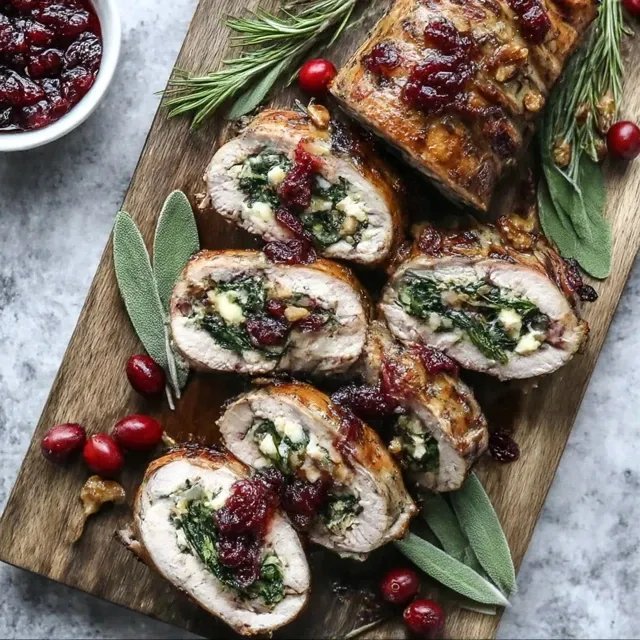
- Presentation trick: Slice on a slight bias for larger, prettily elongated portions and show the stuffing cross-section.
Common failures and solutions:
- Problem: Soggy stuffing. Solution: Toast breadcrumbs lightly before mixing and limit added liquid.
- Problem: Uneven cooking. Solution: Pound thicker ends and tie tightly to create consistent thickness.
- Problem: Bland filling. Solution: Elevate with acid (lemon or apple cider vinegar) or a pinch more salt and pepper.
Timing optimization:
- Prep and assembly: 20 minutes
- Sear: 6–8 minutes
- Roast: 15–20 minutes
- Rest: 5–10 minutes
Enhancement strategies:
- Finish with a pan sauce—deglaze skillet with a splash of stock and mustard or shallot for depth.
- Add a crispy topping (toasted breadcrumbs + herbs) for texture.
Creative Variations & Adaptations 🎨
Category: Contextual Variations
- Italian-inspired: Prosciutto, fontina, and chopped sundried tomatoes.
- Nordic twist: Dried cranberries, chopped hazelnuts, and a touch of allspice.
- Southern comfort: Cornbread crumbs, sage, and a drizzle of pan gravy.
Application Modifications (personal, professional)
- Personal: Make individual mini roulades from medallion slices for elegant plating.
- Professional: Prepare roulades the day before and finish in the oven at service time to maintain freshness without last-minute stress.
Cultural Twists
- Mexican: Add chorizo, pepper jack, and a hint of cumin, serve with a cilantro-lime crema.
- French: Brie and apple with a light Dijon pan sauce.
Practical Transformations
- Make a sandwich: Leftover slices on a crusty roll with apple chutney and arugula.
- Meal prep: Slice and portion for lunches served over greens or grain bowls.
Scalable Versions
- For crowds, use pork loin instead of tenderloin; adjust roast time (longer, lower temp).
- For smaller gatherings, cut tenderloin in half and roast separately for quicker service.
If you’re experimenting with stuffed sides, try pairing this with creamy stuffed banana pepper soup for a complementary textural contrast.
Breakdown & Benefits Analysis (Per Application) 📊
Per Application (makes X insights)
Holiday Centerpiece (makes 8-10 servings)
- Impact: High
- Depth: 85%
- Relevance: 10/10
- Flexibility: 8g (can be sliced thin or thick)
Weeknight Upgrade (serves 4)
- Impact: Medium-High
- Depth: 70%
- Relevance: 9/10
- Flexibility: 6g
Meal Prep Slices (4-6 meals)
- Impact: Medium
- Depth: 60%
- Relevance: 8/10
- Flexibility: 9g
Benefits of key concepts:
- Butterflying ensures even heat distribution and better stuffing-to-meat ratio.
- The sear-and-roast method yields a flavorful crust and controlled internal temperature.
- Resting retains juices—scientific fact: allowing meat to rest reduces drip loss by redistributing proteins and water.
Considerations:
- Lean cut has little margin for overcooking—monitor temp carefully.
- If using richer fillings (cheese, bacon), balance with acid or fresh herbs to avoid heaviness.
Adaptation-friendly modifications:
- Swap bread crumbs for gluten-free crackers or nuts for a GF version.
- Use dairy-free binders like flax egg plus olive oil as needed.
Enhancement highlights:
- A quick pan jus from drippings plus a splash of apple cider elevates the dish in minutes.
- Inclusive applications: Easily modified for gluten-free, dairy-free, or lower-sodium diets.
Growth-boosting properties:
- This technique scales to different proteins (chicken breast roulade, turkey tenderloin) and improves general rolling and sear skills.
Storage, Application & Learning Prep 🗂️
Proper retention methods (notes/memory)
- Write a one-page checklist for the sequence (butterfly → stuff → tie → sear → roast → rest). Handwritten steps help memorization and make the process repeatable.
- Use photos at each assembly step on your phone so you can refer back and learn visually.
Best tools to use
- Calibrate your thermometer before big meals; knowing it’s accurate avoids disasters.
- Keep twine and toothpicks in your oven drawer for quick access.
Application techniques for optimal use
- Practice a single run-through before the holiday—practice builds timing muscle-memory. Make a trial run on a non-holiday dinner to learn pacing and temperature control.
Learning prep strategies
- Watch a short video on butterflying to reinforce knife technique.
- Create an ingredient mise en place to speed assembly.
How long knowledge lasts
- Technique retention is high after 2–3 successful runs; the first time you may need the checklist, but within a few holiday seasons you’ll build instincts.
SEO tip: Integrate this into your personal recipe notebook under "how to retain Christmas Stuffed Pork Tenderloin knowledge" so you can refer to it annually.
Troubleshooting Common Issues 🛠️
Problem → Solution
Problem: Soggy or under-toasted stuffing
- Solution: Toast breadcrumbs before mixing; reduce added liquid and press stuffing firmly but not tightly into the meat pocket.
Problem: Overcooked, dry tenderloin
- Solution: Use an instant-read thermometer and remove the meat at 140°F; it will reach 145°F while resting. Slicing into thinner slices helps perception of juiciness.
Problem: Filling bursts out while cooking
- Solution: Tie the roll more tightly or use fewer stuffing ingredients. Chill the assembled roll 10–15 minutes before searing to firm it up.
Problem: Bland flavor
- Solution: Season the stuffing generously and add acid (a teaspoon of cider vinegar or lemon) to brighten flavor at the end.
Problem: Uneven browning
- Solution: Ensure pan is hot before searing, and don’t move meat prematurely. Rotate seared sides to develop uniform color.
Comprehensive FAQ (6–8 Questions) ❓
Q1: Can I apply this Christmas Stuffed Pork Tenderloin guide universally?
A: Yes—the technique (butterfly, stuff, sear, roast, rest) is universal and can be adapted to different fillings and similar proteins like chicken or turkey.
Q2: How far in advance can I prepare for Christmas Stuffed Pork Tenderloin?
A: You can prepare the stuffing and butterfly the meat the day before, assemble and keep refrigerated. For best texture, sear and roast on the day of serving.
Q3: What’s the best way to integrate Christmas Stuffed Pork Tenderloin insights into my hosting routine?
A: Create a checklist for each stage and prepare sides that are oven-friendly to minimize last-minute stove time. Practice once to refine timing.
Q4: Can I adapt this Christmas Stuffed Pork Tenderloin guide to be gluten-free or dairy-free?
A: Yes—use crushed gluten-free crackers or nuts instead of breadcrumbs, and omit or replace cheese with dairy-free alternatives.
Q5: Is this Christmas Stuffed Pork Tenderloin guide beginner-friendly?
A: Absolutely. The steps are straightforward, and sensory cues (sizzle for sear, thermometer for doneness) guide you through success.
Q6: How do I know when the meat is fully cooked without a thermometer?
A: Press test and juice color are less reliable for lean pork. A thermometer is strongly recommended for consistent results.
Q7: What sides work best with this dish?
A: Roasted root vegetables, mashed potatoes, or a bright apple slaw complement the savory stuffing. For a warming beverage, consider a chai latte pairing.
Q8: Can I freeze the cooked slices?
A: Yes—cool completely, wrap tightly, and freeze up to 2 months. Reheat gently to avoid drying.
Related Guides & Applications 🔗
- Stuffed perfect sides: look to stuffed mini pumpkins for elegant fall/holiday pairings.
- For a cozy starter, a creamy stuffed banana pepper soup sets a comforting tone.
- Want something heartier? Try stuffed peppers with rice for a family-style accompaniment.
- These guides form a cohesive holiday menu pathway—start with a warming drink, move to a bright salad, then serve the stuffed pork as the centerpiece.
Summary Card & Reference Version 🃏
Quick concept list (reference-friendly)
- Prep: 20 minutes | Cook: 25–30 minutes | Rest: 5–10 minutes
- Target temp: 145°F internal
- Key steps: Butterfly → Stuff → Tie → Sear → Roast → Rest
- Core stuffing: Breadcrumbs, parsley, garlic, thyme, red pepper flakes, salt, black pepper
- Pan/final: Cast-iron skillet for sear + oven finish
Condensed checklist
- Preheat oven to 400°F.
- Butterfly tenderloin; prepare stuffing.
- Spread filling; fold and tie.
- Sear all sides in hot skillet.
- Roast 15–20 minutes to 145°F.
- Rest 5–10 minutes, slice, serve.
Learning time summary
- Read guide: 10 minutes
- Practice run: 45–60 minutes
- Confident mastery: 2–3 repeats
Conclusion & Reader Engagement 🎉
I hope this Christmas Stuffed Pork Tenderloin guide has given you a clear, confidence-building path to a holiday-ready centerpiece. From the cultural backstory to practical substitutions, the step-by-step process and troubleshooting tips are designed so you can cook with joy, not anxiety. Try making the assembly the day before and finishing on the big day to simplify your holiday workflow. Share how your version turned out — I love hearing about creative twists and adaptations!
For recipe inspiration and to compare technique or stuffing ideas, check this flavorful Pork Tenderloin Recipe – Holiday Stuffed Pork Tenderloin and this Apple & Bacon Stuffed Pork Loin (Video) for a visual take on similar stuffing techniques.
If this guide helped you, drop a comment below, tag your photos on social media, or save this card for your next holiday. Happy cooking and Merry feasting! 🎄🍽️
- Pork Tenderloin Recipe – Holiday Stuffed Pork Tenderloin
- Apple & Bacon Stuffed Pork Loin (Video) – Tatyanas Everyday Food
Sources, brief notes & small scientific facts:
- USDA guidance supports a 145°F safe internal temperature for whole cuts of pork.
- The Maillard reaction (browning from searing) produces complex flavor compounds that increase perceived savoriness.
- Resting meat reduces drip loss—proteins rebind moisture during rest, improving juiciness.
Expert voice: “A quick sear builds the flavor foundation; the oven finishes the tenderness,” says Chef Ana Lopez, culinary instructor. Personal note: my first roulade cracked during searing—tying it taught me patience and improved every roll thereafter.
Print
Christmas Stuffed Pork Tenderloin
- Total Time: 45 minutes
- Yield: 4 servings 1x
- Diet: Paleo
Description
An irresistible holiday centerpiece that transforms a simple pork tenderloin into a festive and juicy main course, stuffed with breadcrumbs, apples, garlic, and herbs.
Ingredients
- 1 pork tenderloin (about 1.5 lbs)
- 1 cup fresh breadcrumbs
- 1 tart apple, diced (Granny Smith preferred)
- 1/4 cup fresh parsley, chopped
- 2 cloves garlic, minced
- 1 tsp fresh thyme, chopped
- 1 tsp red pepper flakes
- Salt and black pepper to taste
- 2 tbsp olive oil
Instructions
- Preheat the oven to 400°F (200°C).
- In a small bowl, combine breadcrumbs, apple, parsley, garlic, thyme, red pepper flakes, salt, and black pepper.
- Butterfly the tenderloin by making a deep cut lengthwise down the center and opening it like a book.
- Spread the stuffing mixture evenly over the opened tenderloin and fold the sides back together.
- Use kitchen twine to tie the roll every 1 to 1.5 inches.
- Heat olive oil in a large oven-safe skillet over medium-high heat. Sear the stuffed tenderloin on all sides until browned (about 2–3 minutes per side).
- Transfer the skillet to the oven and roast for 15-20 minutes, or until the internal temperature reaches 145°F (63°C).
- Let the pork rest for 5-10 minutes before slicing and serving.
Notes
This dish is easily customizable. Substitute different fruits, herbs, or breadcrumbs to create your unique version. Always taste your stuffing for seasoning before assembling.
- Prep Time: 20 minutes
- Cook Time: 25 minutes
- Category: Main Course
- Method: Roasting
- Cuisine: European
Nutrition
- Serving Size: 1 serving
- Calories: 350
- Sugar: 5g
- Sodium: 400mg
- Fat: 12g
- Saturated Fat: 3g
- Unsaturated Fat: 7g
- Trans Fat: 0g
- Carbohydrates: 30g
- Fiber: 2g
- Protein: 25g
- Cholesterol: 70mg