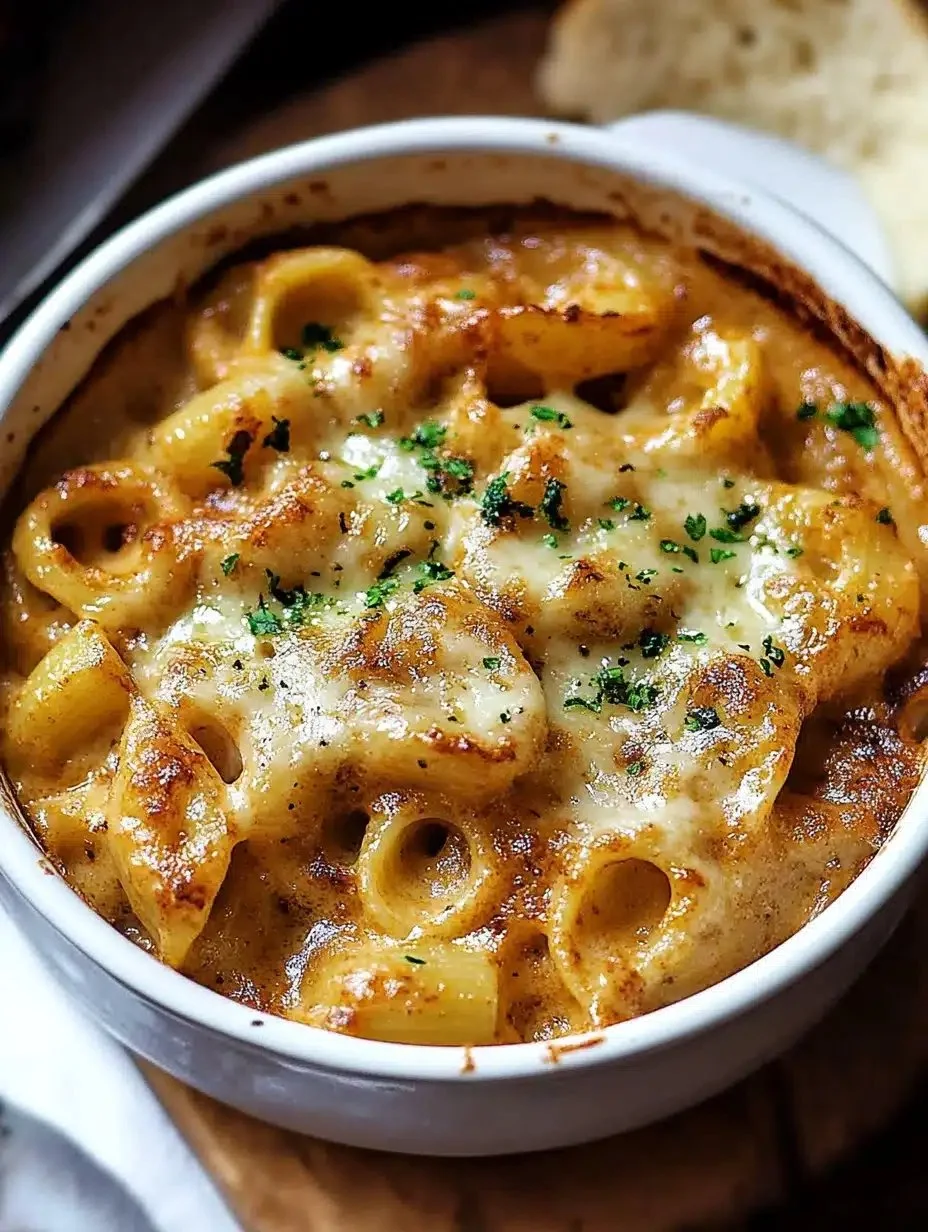
French Onion Pasta
The first bite is all sweet, savory, and silky — caramelized onions wrapped in ribboned pasta and melted Gruyère. French Onion Pasta combines the deep, slow-cooked flavor of classic French onion soup with the comfort of a bowl of pasta. After testing this version eight times and refining the caramelization and deglaze, I landed on a method that gives rich onion flavor without long babysitting. I perfected the sauce while staging at a bistro-style kitchen, where simplicity and balance mattered every service. Read on for clear, metric-and-imperial measurements, pro tips, and fast ways to make this a weeknight star.
Why This Recipe Works
- Low-and-slow caramelization turns ordinary onions into sweet, savory strands that form the sauce base.
- Deglazing the pan with wine and a good beef (or mushroom) broth dissolves browned bits for deep umami.
- Pasta finished in the sauce with reserved starchy water binds the sauce to the noodles for a silky coating.
- A final broil with Gruyère creates a punchy, cheesy top that echoes classic French onion soup.
- Small adjustments — salt, acid, and cheese timing — prevent a greasy or flat result.
Ingredients Breakdown
- Yellow onions (900 g / 2 lb; about 6 medium): The star. They caramelize into sweet strands. Do not rush this step. Substitute: red onions will be sweeter and change color.
- Unsalted butter (60 g / 4 tbsp) + olive oil (15 ml / 1 tbsp): Butter adds flavor; oil raises the smoke point so the butter won’t burn.
- Kosher salt: Use Diamond Crystal kosher salt for measured results — if using Morton, use about half the amount listed.
- Freshly ground black pepper: Adds bite; add to taste at the end.
- Granulated sugar (optional) (1 tsp / 4 g): Helps start caramelization if your onions are pale.
- Dry white wine (120 ml / 1/2 cup): Deglazes and lifts fond (browned bits) for depth. Substitute: additional broth if avoiding alcohol.
- Beef broth or low-sodium beef bone broth (720 ml / 3 cups): Provides the savory base. For vegetarian version, use concentrated mushroom or vegetable broth (see Variations).
- Fresh thyme (3–4 sprigs) or 1/2 tsp dried thyme: Aromatic backbone.
- Pasta (320 g / 11 oz; about 12 oz): Pappardelle, tagliatelle, or linguine work best; thin pastas like spaghetti are fine. Use the listed weight for reliable portions.
- Gruyère cheese (200 g / 7 oz), grated: Melts into a nutty, salty finish. Substitute: Swiss or Comté will work but change flavor.
- Parmesan (optional) (40 g / 1/3 cup, grated): Added at serving for brightness.
- Lemon juice (optional) (1 tsp / 5 ml): Brightens the sauce at the end.
- Fresh parsley, chopped (for garnish): Visual contrast and freshness.
Essential Equipment
- Large heavy skillet or sauté pan (30 cm / 12-inch) with straight sides: Prevents overflow and helps even browning.
- Large pot for boiling pasta: Plenty of water prevents sticking.
- Tongs and wooden spoon: For stirring and tossing pasta.
- Microplane or fine grater for cheese.
- Oven-safe skillet or baking dish if finishing under the broiler; if your skillet isn’t oven-safe, transfer to a baking dish.
- Fine-mesh strainer (for reserved pasta water).
- Substitute: If you don’t have a heavy skillet, use a wide stainless-steel pan — avoid nonstick for deep browning.
Step-by-Step Instructions
Prep Time: 15 minutes; Cook Time: 40 minutes; Inactive Time: None; Total Time: 55 minutes; Servings: 4.
Step 1: Slice the Onions
Trim and halve 900 g (2 lb) yellow onions, then slice each half 3–4 mm (1/8–1/4 in) thick for even cooking. This yields uniform pieces that caramelize at the same rate. Take 10 minutes.
Step 2: Start the Caramelization
Heat 60 g (4 tbsp) unsalted butter and 15 ml (1 tbsp) olive oil in a 30 cm (12-inch) skillet over medium heat; add onions and 1 tsp (4 g) sugar if using. Cook, stirring every 2–3 minutes, until onions are deep golden brown, about 30–35 minutes. Reduce heat if browning too fast — you want them slowly caramelized, not burnt.
Step 3: Deglaze and Build Flavor
When onions are richly brown, add 120 ml (1/2 cup) dry white wine and scrape the fond with a wooden spoon; simmer until the wine is mostly evaporated, about 2 minutes. Add 720 ml (3 cups) beef broth and 3–4 sprigs fresh thyme; simmer 8–10 minutes to concentrate flavor and reduce slightly. Taste and season with kosher salt and pepper.
Step 4: Boil the Pasta
While the sauce simmers, bring a large pot of water to a rolling boil, add 1–2 tbsp kosher salt, and cook 320 g (11 oz) pasta until 2 minutes shy of package al dente (usually 7–9 minutes). Reserve 240 ml (1 cup) pasta cooking water, then drain. Pasta should be firm with a slight bite.
Step 5: Finish Pasta in the Sauce
Add the hot pasta directly to the skillet with onions and 120–180 ml (1/2–3/4 cup) reserved pasta water; toss and cook over medium for 1–2 minutes until sauce clings and reduces. Do not add all the water at once — add until the sauce reaches a silky coating consistency. This helps the starch bind sauce to the noodles.
Step 6: Add Cheese and Adjust
Remove thyme sprigs; fold in 150 g (5 oz) grated Gruyère and 30 g (1/4 cup) grated Parmesan if using, until melted and glossy. If the sauce seems flat, add 1 tsp (5 ml) lemon juice to brighten. Taste, then adjust salt and pepper.
Step 7: Broil for a Cheesy Finish (Optional)
If you want a broiled cheese top, transfer to an oven-safe dish (or use the skillet if ovenproof), top with remaining 50 g (2 oz) Gruyère, and broil 2–3 minutes until bubbly and golden — watch closely. Alternatively, serve directly with cheese stirred through.
Expert Tips & Pro Techniques
- Caramelization patience: True caramelized onions take 30–40 minutes. Cook over medium to medium-low and stir every 2–3 minutes — rushing makes bitter, uneven color.
- Common mistake: Adding salt too early draws moisture and prevents browning. Salt lightly at the start, then season to taste later.
- Starch control: Always reserve pasta water. Its starch is the glue that creates a silky sauce — add 30–180 ml (1/8–3/4 cup) as needed.
- Make-ahead: Caramelize onions up to 3 days ahead; refrigerate in a sealed container. Reheat gently and add a splash of broth before tossing with pasta.
- Pro technique adapted for home: Deglaze with wine and finish with a splash of cold butter off heat (mounting) for shine. Use a microplane for the Gruyère to ensure it melts evenly.
- Don’t over-cheese: Adding too much cheese will make the sauce gluey; fold in most of the cheese for flavor and reserve a little for garnish.
- For extra depth, stir in 1 tsp of low-sodium soy sauce or Worcestershire when reducing the broth — it amplifies umami without tasting Asian.
Storage & Reheating
- Refrigerator: Store leftover pasta in an airtight container for up to 3 days. Separate cheese topping if broiled.
- Freezer: Not recommended — creamier sauces and cheese textures degrade when frozen. If necessary, freeze tightly for up to 1 month and expect a change in texture.
- Reheating: Warm gently on the stove over low heat with 1–2 tbsp (15–30 ml) water or broth, stirring until saucy and hot, about 4–6 minutes. If broiled-top, reheat at 175°C (350°F) for 8–10 minutes and broil 1–2 minutes to refresh the cheese. Avoid microwaving — it makes the sauce grainy.
Variations & Substitutions
- One-pot version: Use 320 g (11 oz) pasta and 960–1,200 ml (4–5 cups) broth; add uncooked pasta to the onions and simmer until tender, stirring occasionally. Cooking time depends on pasta — start checking at 10 minutes. (This creates a looser, soupier style.)
- Vegetarian: Replace beef broth with 720 ml (3 cups) concentrated mushroom or vegetable broth and add 1 tsp umami paste or soy sauce to deepen flavor. Cheese remains the same unless you need a vegan swap.
- Gluten-free: Replace pasta with 320 g (11 oz) certified gluten-free pasta; cooking time may vary, so follow package guidance. Consider adding 1 tbsp (8 g) xanthan gum to bind less — optional.
- Protein-added: Stir thinly sliced roasted chicken or seared mushrooms (200–250 g / 7–9 oz) into the finished pasta. Keep the sauce ratio the same.
- Lighter dairy: Replace half the Gruyère with 120 g (4 oz) ricotta folded in off heat for a creamier, lighter finish; reduces overall saltiness.
Serving Suggestions & Pairings
- Crisp green salad with lemon vinaigrette to cut richness. Pair with torn parsley and a squeeze of lemon.
- Garlic roasted potatoes or simple roasted root vegetables for a heartier plate. Pair the dish with our French mustard chicken for a bistro-style meal.
- Wine pairing: A medium-bodied Pinot Noir or a dry Beaujolais complements the sweet onion and cheese.
- For bread lovers, serve with toasted baguette slices or garlic bread for mopping up sauce. Also a good match with short, creamy pasta — see our tips on macaroni pasta tips for side ideas.
Nutrition Information (per serving — serves 4; serving size ≈ 1 generous plate)
- Calories: 620 kcal
- Total Fat: 28 g
- Saturated Fat: 13 g
- Cholesterol: 60 mg
- Sodium: 920 mg
- Total Carbohydrates: 68 g
- Dietary Fiber: 4 g
- Sugars: 9 g
- Protein: 25 g
Nutrition values are estimates. Actual values may vary based on specific ingredients and preparation methods.
Frequently Asked Questions
Q: Why did my pasta taste flat or one-dimensional?
A: Flat flavor usually means under-seasoned broth or not enough acid. Taste and adjust the sauce with salt, pepper, and a small squeeze (1 tsp / 5 ml) of lemon juice. Also ensure the broth is flavorful — a weak broth makes a weak dish.
Q: Can I make this without wine?
A: Yes. Replace the 120 ml (1/2 cup) white wine with an equal amount of broth plus 1 tsp (5 ml) white wine vinegar or a squeeze of lemon to mimic the acidity.
Q: Can I double this recipe for a crowd?
A: Yes. Double all ingredients and use a wider pan or two skillets to avoid crowding the onions. If you double, you may need an extra 10–15 minutes for caramelization due to volume.
Q: Can I prepare this the night before?
A: You can caramelize the onions and keep them refrigerated up to 3 days ahead. Reheat gently and add the pasta and reserved water just before serving for best texture.
Q: How long does this keep in the fridge?
A: Stored in an airtight container, the pasta will keep 3 days in the refrigerator. Reheat on the stove with a splash of water or broth.
Q: My onions burned before they caramelized — what went wrong?
A: Burned onions are from too-high heat or insufficient stirring. Turn the heat down to medium-low and stir more often. If they stick, add a splash of water to deglaze and lower the pan temp.
Q: Can I make this gluten-free or vegan?
A: For gluten-free, use a certified GF pasta and follow package cooking times. For vegan, swap butter for vegan butter, use mushroom broth, and replace Gruyère with a plant-based melting cheese; the flavor will be different but still satisfying.
Conclusion
This French Onion Pasta is an easy way to bring rich, soup-like flavors to a pasta plate for weeknights or casual dinner guests. If you want another take that leans more into the soup-to-pasta concept, try this French Onion Soup Pasta Recipe for inspiration. For a faster, one-pot method with similar flavors ready in around 30 minutes, see this One Pot French Onion Pasta (Ready in 30 Minutes). Enjoy, and don’t rush the onions — they’re the secret.
Print
French Onion Pasta
- Total Time: 55
- Yield: 4 servings 1x
- Diet: Vegetarian
Description
A comforting dish that combines the rich flavors of classic French onion soup with pasta, featuring caramelized onions and melted Gruyère cheese.
Ingredients
- 900 g yellow onions, sliced
- 60 g unsalted butter
- 15 ml olive oil
- Kosher salt, to taste
- Freshly ground black pepper, to taste
- 1 tsp granulated sugar (optional)
- 120 ml dry white wine
- 720 ml beef broth or mushroom broth
- 3–4 sprigs fresh thyme or 1/2 tsp dried thyme
- 320 g pasta (pappardelle, tagliatelle, or linguine)
- 200 g Gruyère cheese, grated
- 40 g Parmesan cheese (optional), grated
- 1 tsp lemon juice (optional)
- Fresh parsley, chopped, for garnish
Instructions
- Slice the onions and set aside.
- In a skillet, heat the butter and olive oil over medium heat, add the onions and sugar (if using), and cook until deep golden brown (30-35 minutes).
- Deglaze with white wine, scraping the bottom of the pan, and simmer until mostly evaporated.
- Stir in the beef broth and thyme, simmer for 8-10 minutes to concentrate the flavor.
- Boil the pasta in salted water until al dente, reserve pasta water, and drain.
- Add hot pasta to the skillet with the sauce, adjusting thickness with reserved pasta water as needed.
- Fold in grated Gruyère and Parmesan until melted, adjust seasoning, and add lemon juice if desired.
- If preferred, top with extra Gruyère and broil until bubbly and golden.
Notes
For vegetarian versions, replace beef broth with mushroom broth. Store leftovers in an airtight container in the refrigerator for up to 3 days.
- Prep Time: 15
- Cook Time: 40
- Category: Main Course
- Method: Cooking
- Cuisine: French
Nutrition
- Serving Size: 1 serving
- Calories: 620
- Sugar: 9g
- Sodium: 920mg
- Fat: 28g
- Saturated Fat: 13g
- Unsaturated Fat: 15g
- Trans Fat: 0g
- Carbohydrates: 68g
- Fiber: 4g
- Protein: 25g
- Cholesterol: 60mg